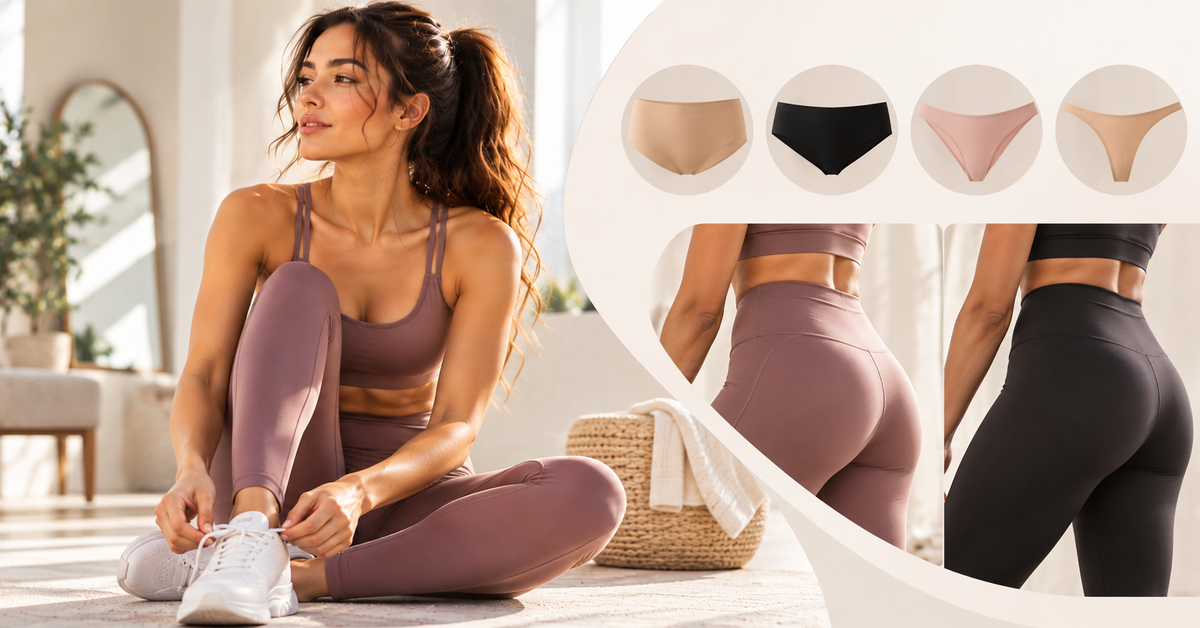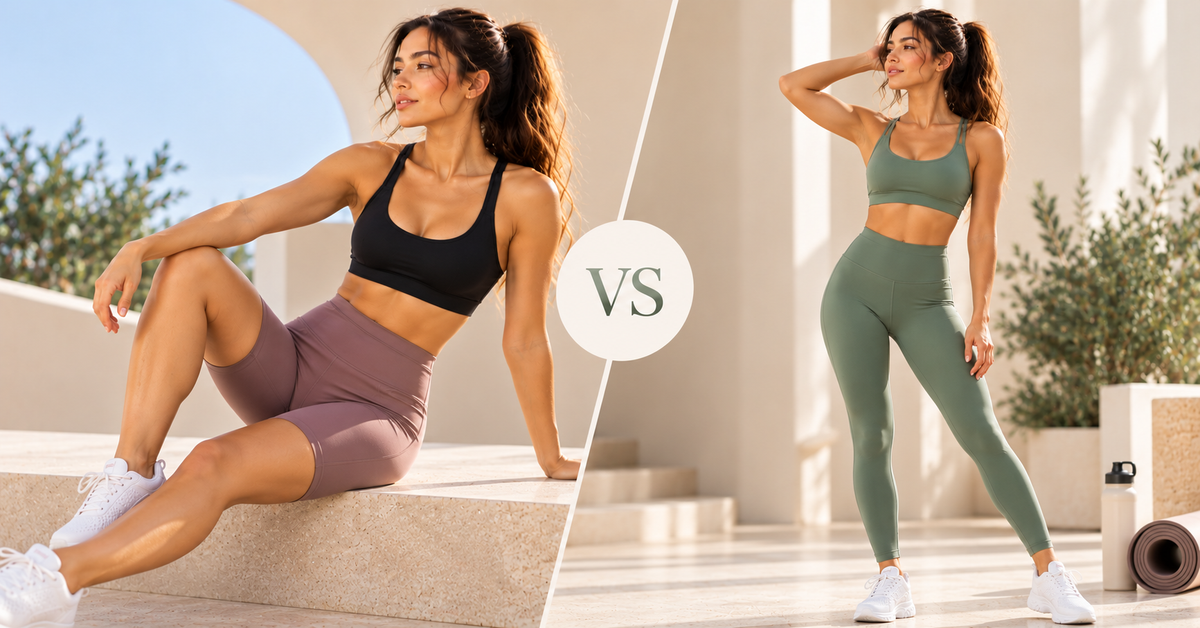


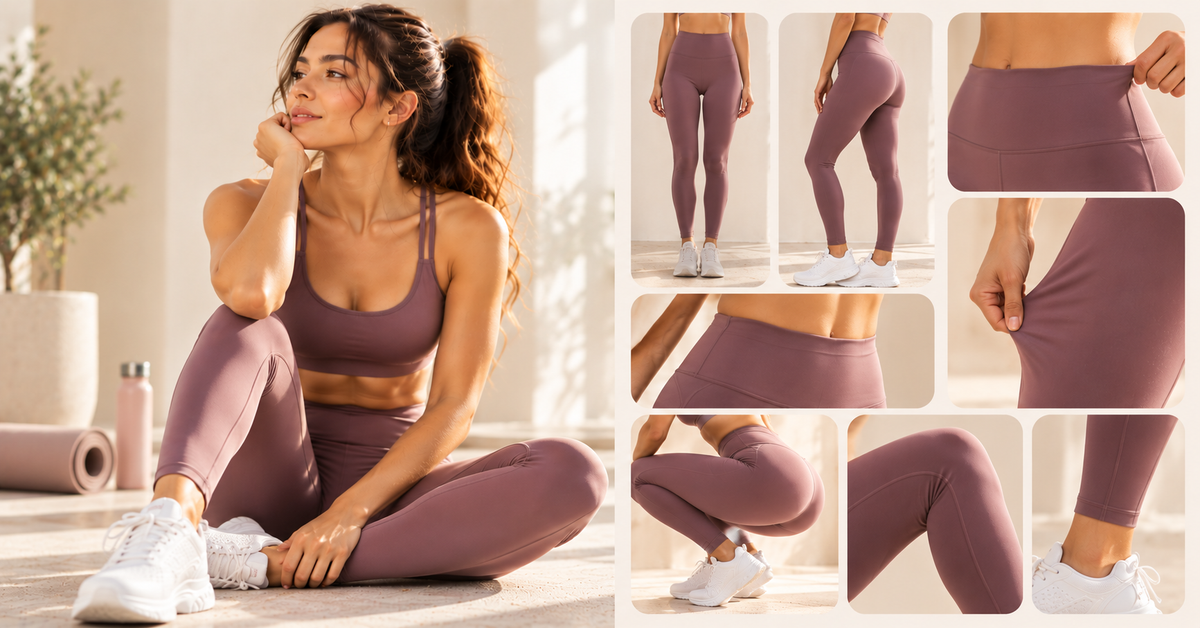
How Should Leggings Fit? 7 Signs You've Found the Right Pair
Leggings should feel close to the body.
But there's an important difference between:
Supportive and restrictive.
Finding that balance can transform how leggings feel during workouts and everyday wear.
Here are seven things to check.
1. The Waistband Stays in Place
Your waistband shouldn't require constant adjustment.
Move around.
Sit.
Squat.
Walk.
If you're repeatedly pulling your leggings up, the size, waistband construction or fit may not suit you.
2. You Can Move Naturally
Try a few simple movements.
Squat.
Lunge.
Raise your knees.
Bend.
Stretch.
Leggings should move with your body without creating unnecessary restriction.
3. They Feel Close, Not Painfully Tight
Workout leggings commonly use stretch and compression-like fits.
But tighter isn't automatically better.
You should still feel comfortable breathing, moving and sitting.
4. Check the Coverage
Coverage depends on fabric, color, stretch and construction.
Test your leggings under realistic lighting and movement.
A fabric can appear completely opaque when standing and behave differently when stretched.
5. Look for Excess Fabric

Wrinkling or bunching in certain areas can indicate that the fit isn't quite right.
Some fabric movement is normal, but substantial loose material may suggest trying another size or cut.
6. Pay Attention to Length
Full-length leggings should finish where the design intends on your body.
If they're excessively long, fabric can gather around the ankle.
If they're too short, the proportions may not feel right.
Different inseams exist for a reason.
7. You Forget About Them
This may be the best test.
Good leggings shouldn't demand your attention every five minutes.
You shouldn't constantly:
Pull.
Adjust.
Smooth.
Reposition.
The garment should allow you to focus on what you're doing.
How Tight Should Workout Leggings Be?
They should generally fit close enough to remain secure during movement without creating unnecessary discomfort.
There is no universal level of tightness.
Fabric stretch, waistband construction, activity and personal preference all matter.
Should You Size Up or Down?
Start with the brand's sizing guide.
Don't automatically size down because you assume activewear needs to be extremely tight.
If you're between sizes, consider the specific garment's stretch and intended fit.
Frequently Asked Questions
Should leggings leave marks?
Temporary impressions from close-fitting clothing can occur, but leggings shouldn't feel painfully restrictive.
Why do my leggings keep falling down?
Possible reasons include sizing, waistband design, fabric recovery or the particular cut not matching your body shape.
Should leggings wrinkle behind the knees?
Some movement and wrinkling can be normal, but excessive bunching may indicate a fit or length issue.
How do I know if leggings are too small?
Restricted movement, excessive pressure, uncomfortable digging or fabric being stretched beyond its intended fit can be warning signs.
Should gym leggings be tighter than normal leggings?
Workout leggings may be designed for a more secure fit, but appropriate tightness depends on the garment and activity.
The Best Fit Is the One You Stop Thinking About
Great activewear should support movement rather than distract from it.
Choose leggings that fit your body—not an arbitrary size number.
Okapi Lifestyle — Move comfortably. Move confidently.