

Beyond Cotton: 7 Innovative Natural & Recycled Materials Changing Fashion
Cotton.
Polyester.
Wool.
Linen.
For decades, these names have dominated our understanding of what clothes are made from.
But fashion's material vocabulary is getting much bigger.
Researchers, textile manufacturers and designers are exploring plants, recycled resources and industrial or agricultural by-products to discover new textile possibilities.
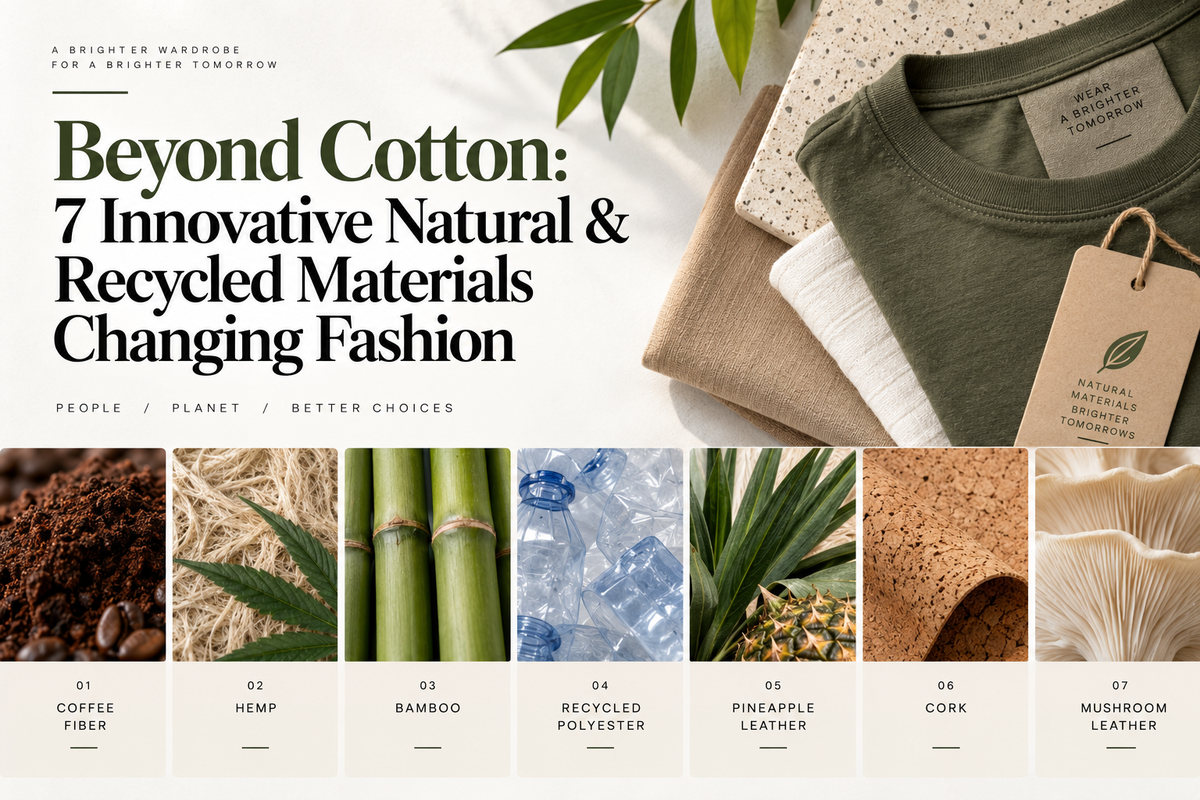
Here are seven material stories worth knowing.
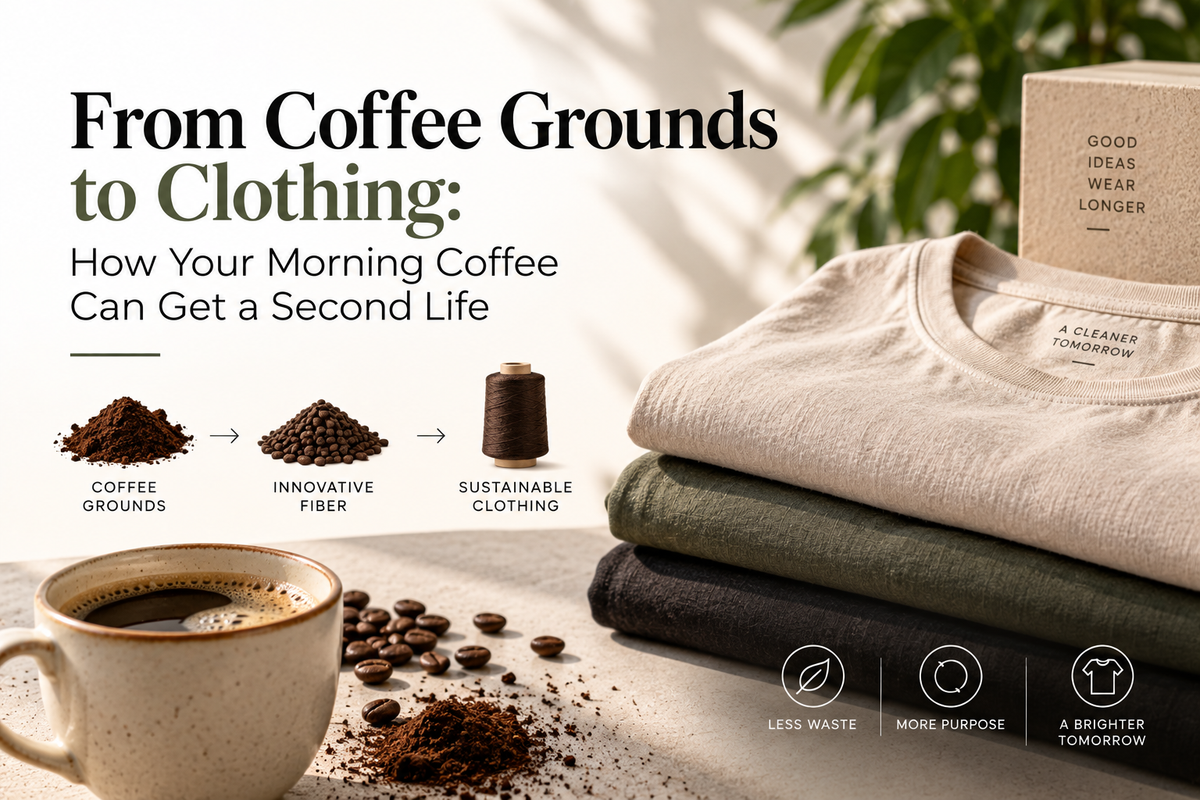
1. Coffee-Derived Textiles
Your morning coffee creates something after the drink is gone:
spent grounds.

Specialized textile technologies can process coffee-derived material for incorporation into fibers and fabrics.
The idea is compelling because it asks whether a familiar by-product can become an input for something completely different.
At Okapi Lifestyle, coffee-derived textiles inspired our Café collection.
Drink Coffee. Dress Coffee.
2. Lotus Fiber
The lotus is better known as a flower than a textile source.
Yet fine fibers can be extracted from inside lotus stems and traditionally processed into yarn.
Traditional lotus textile craftsmanship can be extremely labor intensive, making genuine handmade lotus fabric particularly distinctive.
Modern lotus-associated textiles may use different processes and blends, so composition matters.
3. Bamboo-Derived Textiles
Bamboo has become increasingly common in clothing and home textiles.
It grows rapidly, but turning bamboo into wearable fiber requires processing, and different production methods can have very different characteristics.
This is an excellent example of why the word "natural" doesn't tell the complete sustainability story.
4. Banana-Derived Fiber
Banana plants have fibrous material within their stems and pseudostems that can be used in textile and craft applications.
This creates an interesting opportunity in regions where banana agriculture generates significant plant material after harvesting.
The broader idea is powerful:
Agriculture can potentially provide more than food.
5. Pineapple-Leaf-Derived Materials
Pineapple plants produce leaves that remain after fruit harvesting.
Fibers extracted from pineapple leaves have a history of textile use, while modern material innovation has expanded interest in pineapple-derived alternatives for fashion applications.
Again, the exact composition and manufacturing process of each material should be evaluated independently.
6. Recycled Polyester
Polyester is one of fashion's most widely used synthetic fibers.
Recycled polyester seeks to produce textile fiber using recycled plastic inputs rather than relying entirely on virgin feedstocks.
That doesn't make every environmental issue disappear.
Microfiber shedding, recycling infrastructure, energy use and end-of-life remain important considerations.
But recycled inputs can play a role in reducing demand for virgin resources in suitable applications.
7. Recycled Nylon
Nylon is widely used where strength, stretch or durability are useful.
Recycled nylon can use existing nylon waste streams as material inputs.
It is particularly relevant in categories such as activewear, swimwear and accessories.
As with recycled polyester, the word "recycled" describes one aspect of the product rather than its complete lifecycle impact.
Which Sustainable Fabric Is Best?
This is one of the most common questions—and one of the hardest to answer responsibly.
There isn't a universally "best" sustainable fabric.
A useful comparison needs to consider:
Raw-material source.
Processing.
Energy and water requirements.
Chemicals.
Durability.
Garment construction.
Transportation.
Care.
End-of-life.
And, importantly, how much the garment is actually worn.
The Most Important Innovation May Be How We Think
Material science is giving fashion new options.
But consumers also have a role.
We can stop viewing clothes as disposable trends and start becoming curious about what they're made from.
We can demand better explanations.
We can distinguish evidence from marketing.
And we can choose garments designed to remain relevant beyond a single season.
Okapi's Material Philosophy
At Okapi Lifestyle, we don't believe innovative material needs to result in strange-looking fashion.
Our approach is the opposite.
Start with nature and material innovation.
Then translate it into clothing that feels premium, minimal and wearable.
Coffee.
Lotus.
Bamboo.
Banana.
Pineapple.
Mint.
Charcoal.
Recycled fibers.
Different materials.
One question:
What can fashion become when we look at nature differently?
Frequently Asked Questions
What are sustainable fabrics?
The term broadly describes textile materials intended to address environmental or resource considerations, although their actual impact depends on sourcing, processing, manufacturing, use and disposal.
What are some innovative fabrics used in fashion?
Examples include coffee-derived textiles, lotus fiber, bamboo-derived textiles, banana fiber, pineapple-derived materials and recycled synthetic fibers.
Are plant-based fabrics sustainable?
Not automatically. Plant origin is only one part of the lifecycle. Processing and manufacturing also need to be considered.
Are recycled fabrics better than virgin fabrics?
Recycled inputs can reduce reliance on virgin resources in some applications, but overall impact depends on the complete product lifecycle.
What fabrics will be used in the future?
Fashion is likely to continue exploring recycled materials, agricultural by-products, plant-derived fibers, bio-based materials and technologies designed around circularity.
Beyond Cotton. Beyond Convention.
The next chapter of fashion may already be growing around us—or sitting at the bottom of your coffee cup.
We simply have to learn how to see it.
Made from nature. Made better.
Okapi Lifestyle — Nature in Every Thread.