

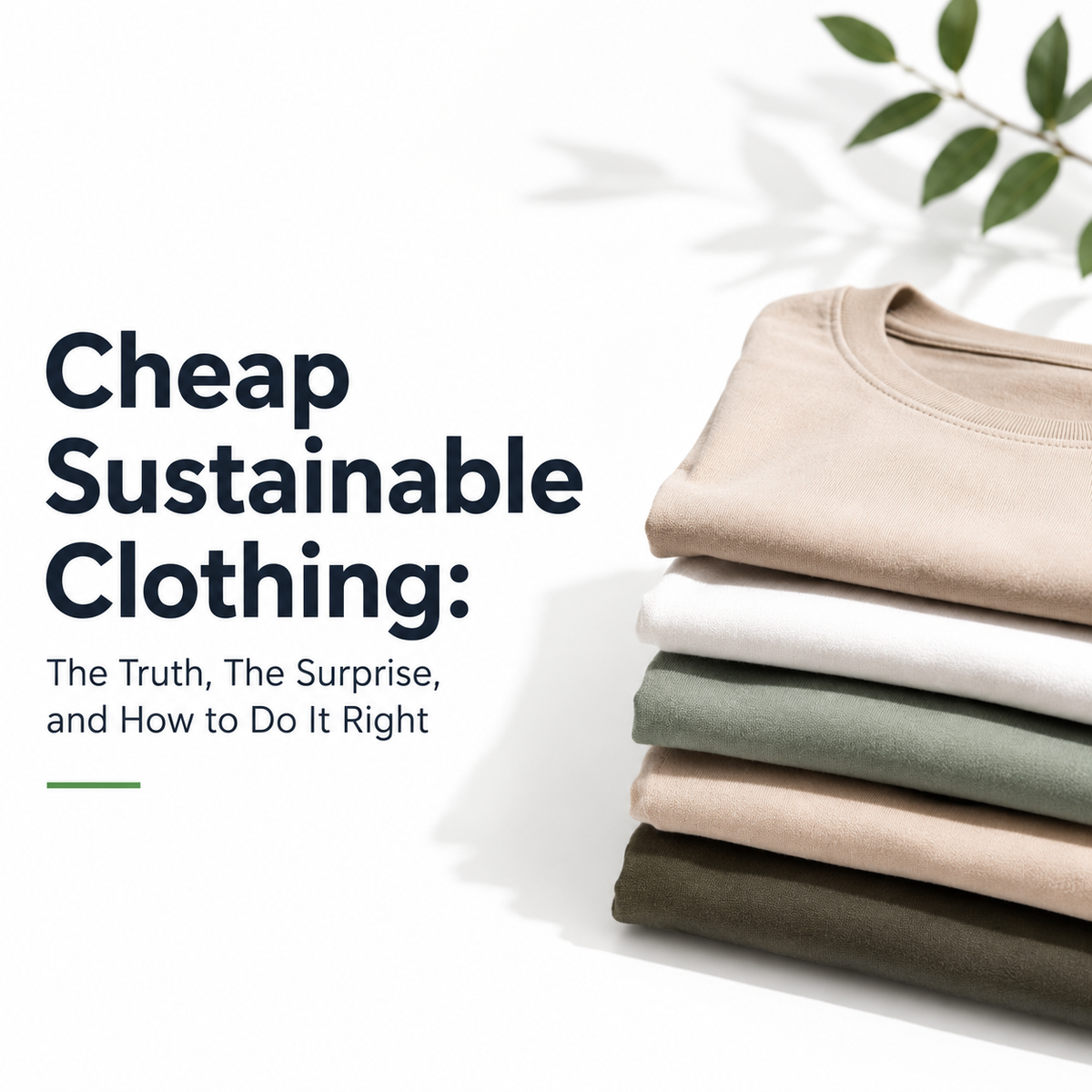
Cheap Sustainable Clothing: Is It Actually Possible?
Short answer: Yes, genuinely — secondhand clothing remains the cheapest way to shop sustainably, often cheaper than fast fashion itself. But a real, recent complication is worth knowing: a Yale study found secondhand shopping can trigger the same overconsumption pattern as fast fashion when people buy cheap "green" items in excess and discard them just as quickly — meaning the honest answer isn't just "buy secondhand," it's "buy secondhand and actually keep wearing it."
The straightforward case for secondhand as genuinely cheap and sustainable
This part isn't complicated: buying secondhand requires no new resources to be produced and keeps a wearable garment out of landfill, and unless you're shopping vintage or authenticated luxury specifically, it's typically the cheapest way to shop with any environmental conscience at all. Local thrift stores avoid shipping costs entirely — both financial and environmental — making them the cheapest tier within an already-cheap category.
The genuinely surprising complication
Here's the part most "just thrift instead" advice skips: a recent Yale study published in Nature found that secondhand shopping can quietly become fast fashion 2.0 through what researchers call a "rebound effect" — people buy secondhand items in excess specifically because the purchases feel cheap and guilt-free, then discard them at the same rapid pace as fast fashion. The researcher leading the study put it plainly: it's "guilt free," which is exactly what makes the pattern easy to fall into without noticing.
This matters for the "cheap sustainable clothing" question specifically: cheap alone doesn't make a purchase sustainable if the underlying consumption pattern — buy a lot, discard fast — stays the same. The actual sustainability comes from keeping the garment in use, not from the fact that it was inexpensive or secondhand to begin with.
The quality caveat worth knowing too
Also worth being honest about: some educators specifically tracking thrift store quality over time report a real, noticeable decline — driven by more fast-fashion-era garments (blended cotton-polyester, harder to break down and often lower construction quality to begin with) now entering the secondhand pipeline. Secondhand isn't automatically higher quality just because it's used; it inherited whatever quality problems existed in the original garment.
What "doing this right" actually looks like
- Buy secondhand with the same durability scrutiny as new — check seams, fabric weight, and construction, same standard covered in our tee durability piece, rather than assuming "used" means "already vetted for quality."
- Actually wear what you buy, repeatedly — the sustainability benefit depends entirely on replacing a would-be new purchase and staying in use, not on the low price alone.
- Combine secondhand with a smaller number of durable new pieces for categories where secondhand quality or fit is genuinely harder to find — this isn't an all-or-nothing choice.
- Notice the guilt-free feeling as a signal to pause, not a green light — if a purchase feels consequence-free specifically because it was cheap, that's worth a second thought regardless of whether it's secondhand or new.
The honest bottom line
Cheap sustainable clothing is real and achievable — secondhand shopping remains a genuinely strong option, and it's not an illusion or marketing trick. But "cheap" and "sustainable" aren't automatically the same claim just because they're both true of the same purchase. The actual sustainability lever, repeated throughout this series, is use and longevity — a cheap secondhand piece worn for years is a genuine win; a cheap secondhand piece worn twice and discarded isn't meaningfully different from fast fashion, whatever the price tag said.
Where this fits with Okapi's own approach
We don't position ourselves as a "cheap" option — our materials and UAE-specific engineering put us in the accessible-to-mid-range tier covered in our affordable UAE brands piece, not competing on lowest price. If genuinely cheap sustainable clothing is your priority right now, secondhand platforms and thrift shopping (with the caveats above) are honestly a better fit than new-garment brands at any price point, including ours.
Frequently asked questions
Is secondhand clothing always more sustainable than buying new?
Usually, but not automatically — the benefit depends on the purchase actually replacing a new item and staying in use, rather than being bought cheaply and discarded quickly in the same pattern as fast fashion.
What is the "rebound effect" in secondhand shopping?
A documented pattern where people buy secondhand items in excess because the low price and "guilt-free" framing lower their usual purchasing restraint, leading to overconsumption similar to fast fashion habits.
Has thrift store clothing quality actually declined?
Some experts tracking this closely report yes — more fast-fashion-era garments with blended synthetic fabrics now enter the secondhand pipeline, meaning quality isn't guaranteed just because an item is used.
Is there a cheap way to shop sustainably beyond secondhand?
Accessible-tier new brands (covered in our affordable UAE brands piece) exist, though they cost more than secondhand — the cheapest genuinely sustainable option remains well-chosen, durability-checked secondhand clothing actually worn long-term.