

Sustainable Dresses for Every Occasion in Dubai
Short answer: Different occasions call for genuinely different sustainable fabrics — organic cotton and linen for daily wear, Tencel or silk for formal events, and a real caveat on recycled polyester occasionwear (still synthetic, still sheds microplastics, even when marketed as sustainable). Dubai's dense social calendar of daytime and evening events makes this occasion-by-occasion approach more useful than a single blanket recommendation.
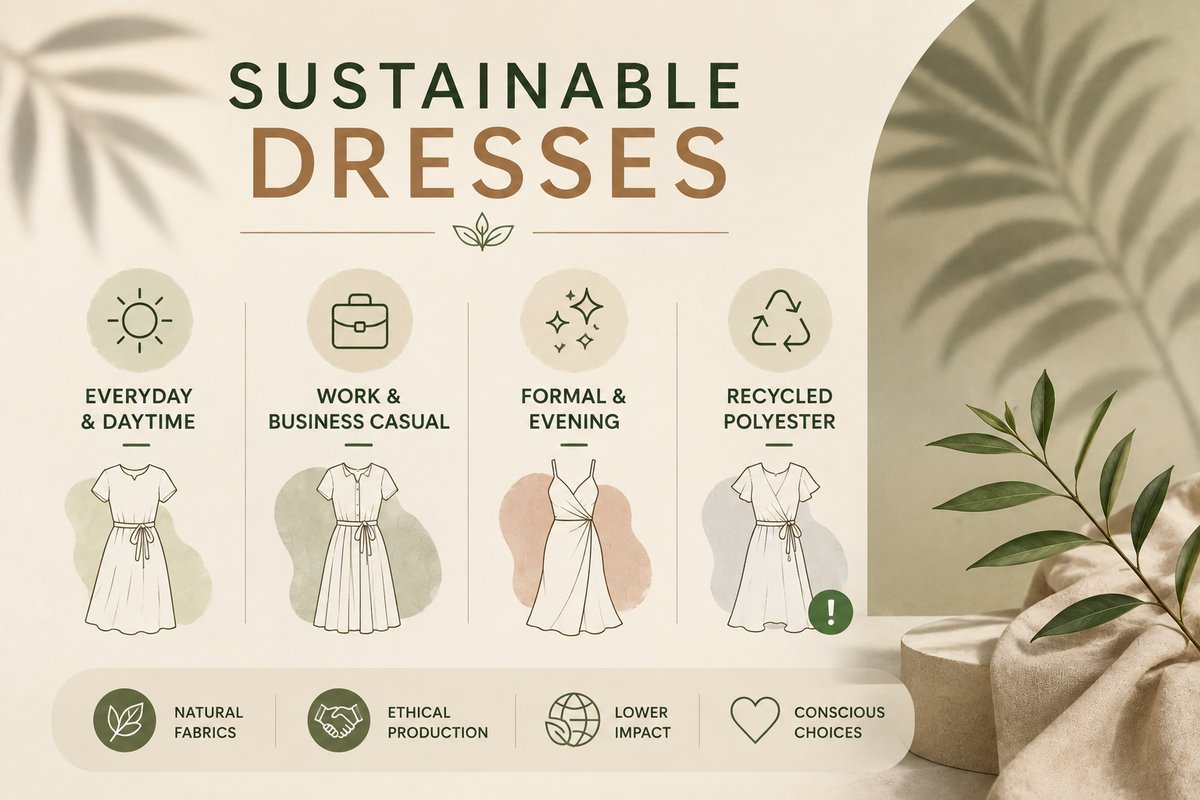
Everyday and daytime dresses
Organic cotton remains the reliable daily choice — breathable, comfortable, grown without harsh chemicals, and increasingly available at accessible price points. Linen (especially organically grown flax) is the stronger pick specifically for genuine outdoor heat: it dries faster than cotton, which matters more in Dubai's humidity than in the milder climates most linen-dress guides are written for.

Work and business-casual dresses
Tencel/lyocell is worth prioritizing here specifically — it drapes with a flowy, polished look while managing moisture noticeably better than cotton, giving it a more "put-together" feel through a full office day without looking wilted by 3pm. Modal is a reasonable softer alternative for the same category.
Formal and evening dresses — the honest caveat
This is where sustainable dress shopping gets genuinely more complicated. Recycled polyester is common in sustainable formalwear specifically because it can mimic the structure and drape of traditional occasionwear fabric — but it's still a synthetic material, and emerging research suggests recycled synthetics may continue shedding microplastics over the fabric's lifetime, not just during production. For formal pieces, silk, Tencel, or viscose (ideally a lower-impact version) are generally the more genuinely sustainable choice over recycled polyester, despite recycled polyester's dominant marketing position in this specific category.
The color-and-heat detail most guides oversimplify
The standard advice — light colors reflect heat, dark colors absorb it — is broadly correct but incomplete. An extremely loose, open weave (like a breezy linen dress) can actually pull heat away from the body even in a darker shade through what's sometimes called a "chimney effect" — airflow through the loose weave outpacing the heat absorbed by the color. This is a genuine nuance, not just a claim: for most people and most dresses, light colors remain the safer, more reliable choice, but it explains why an occasional dark, loosely-woven linen piece can still feel cooler than expected.
The most sustainable dress option, stated plainly
Worth saying directly, same as elsewhere in this series: the most sustainable dress is one already in your closet, worn again rather than replaced for a new event. Timeless silhouettes that work across multiple occasions carry a genuinely lower environmental footprint than trend-specific pieces designed around a single event's aesthetic — a practical argument for versatile cuts over highly occasion-specific designs when you're actually shopping new.
What to check regardless of occasion
- A named fabric, not just "sustainable material" — organic cotton, Tencel, linen, silk, specifically.
- Fair Trade or GOTS certification if labor and organic sourcing both matter to you — they're separate claims, covered in more depth in our ethical vs sustainable breakdown.
- Versatility across occasions — a dress that works for both daytime and a dressier evening genuinely reduces how many pieces you need to own.
Where Okapi fits, honestly
We don't currently make dresses — our line focuses on everyday basics (Café Polo, Café Tee, activewear). If dresses specifically are what you're shopping for, the brands and fabric categories above are the more relevant starting point than our current catalog, and we'd rather point that out plainly than stretch our product range into a claim we can't back up.
Frequently asked questions
What's the best sustainable fabric for a daily dress in Dubai heat?
Linen for the strongest cooling and quick-dry performance, organic cotton as the reliable, more affordable daily alternative.
Is recycled polyester a good choice for a sustainable formal dress?
It's common in the category and structurally useful for formal drape, but it's still synthetic and may continue shedding microplastics over its lifetime — silk, Tencel, or viscose are generally the more genuinely sustainable formal options.
Does dress color really determine how hot you'll feel?
Mostly yes — light colors reflect heat more reliably — but an extremely loose, breathable weave can offset some of a darker color's heat absorption through increased airflow.
What's the single most sustainable dress choice overall?
One you already own and rewear, followed by a genuinely versatile new piece that works across multiple occasions rather than a single-event-specific design.