

Sustainable Loungewear: Comfort Without the Compromise
Short answer: Loungewear has quietly become one of the more genuinely versatile categories in a sustainable wardrobe — no longer confined to the sofa, with roughly 54% of buyers now specifically wanting pieces that work for both indoor relaxation and casual outdoor activity. For fabric, modal and bamboo dominate for softness, organic cotton remains the reliable everyday choice, and — same caveat as our underwear piece — "bamboo" loungewear needs the viscose-vs-lyocell distinction applied here too.
Why loungewear stopped being a single-purpose category
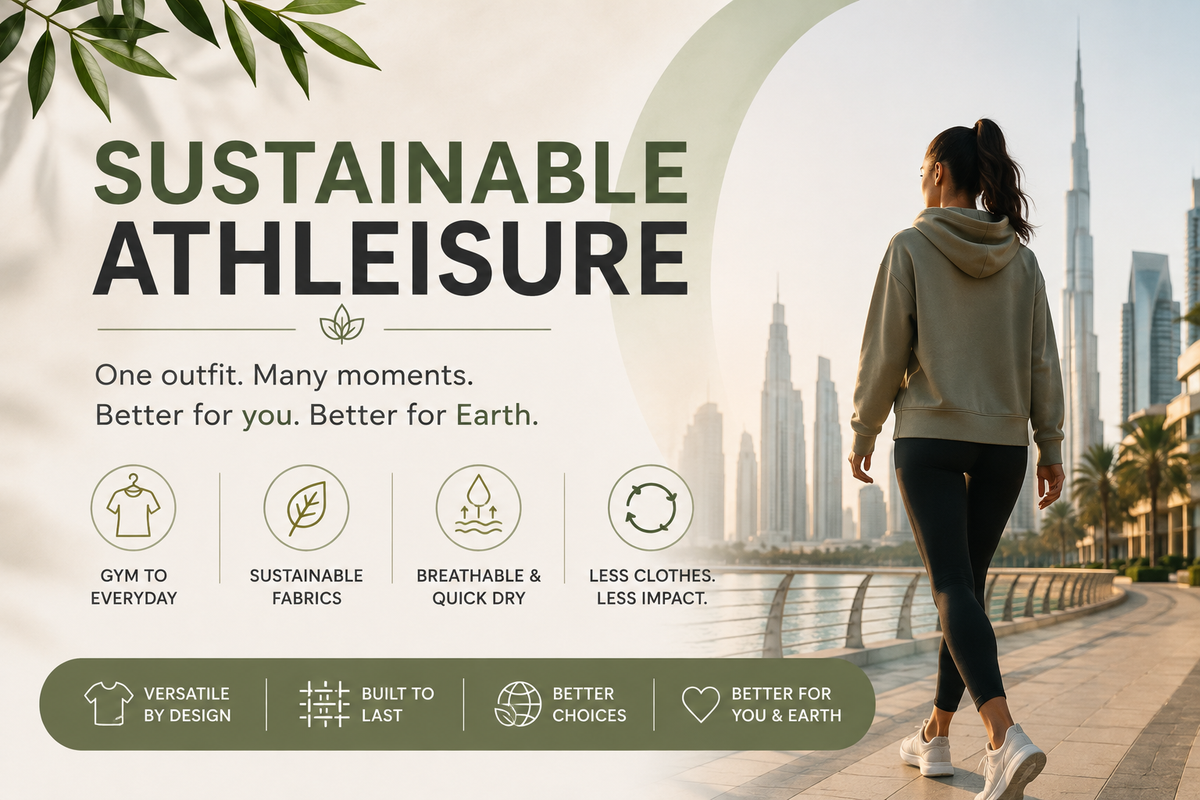
This is a genuine shift worth naming: loungewear in 2026 isn't just at-home wear anymore — joggers for a coffee run, an oversized hoodie doubling as a WFH uniform, pieces designed to move between home and casual outings without a full outfit change. That crossover matters for the same reason covered in our athleisure piece: a single versatile garment replacing multiple single-purpose pieces is a genuine sustainability lever, not just a comfort trend.
Modal — the softness leader, with a real technical reason why
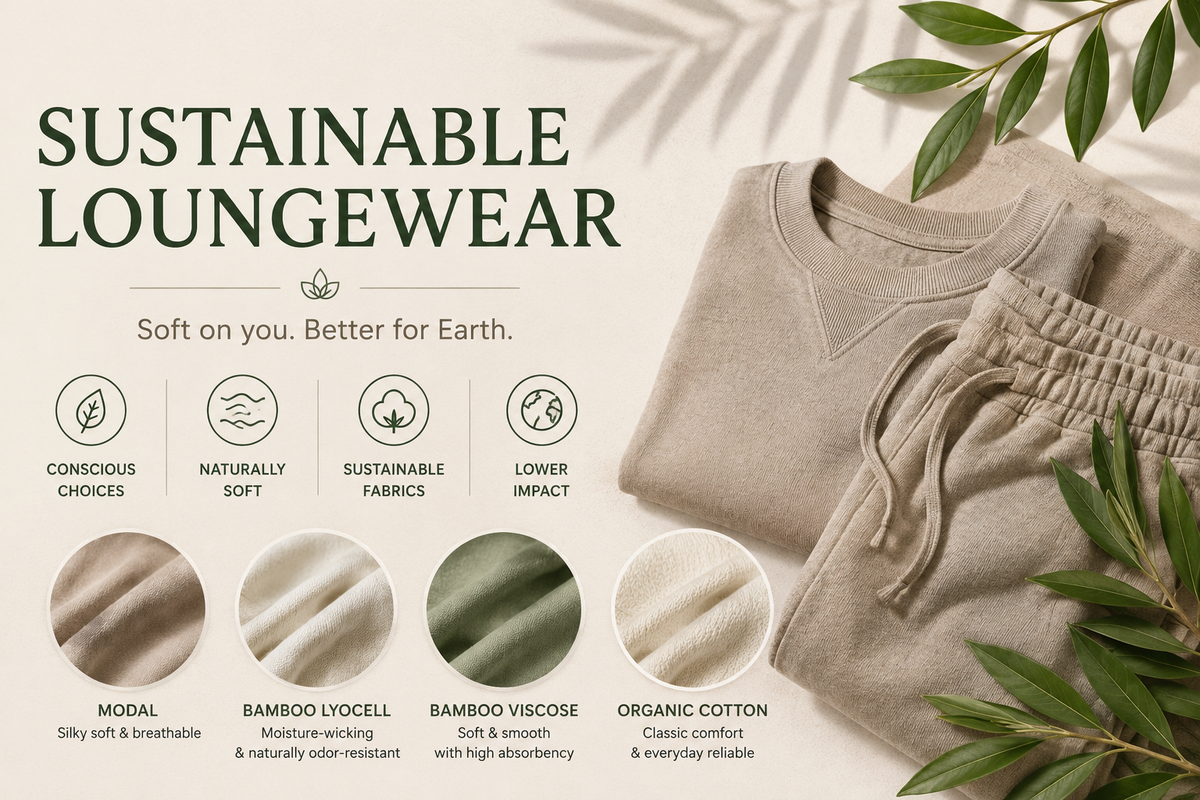
Modal's cross-section is specifically engineered by producers like Lenzing to favor softness over other structural properties, which is why it's consistently described as silkier and cooler-feeling than standard cotton. It shows up disproportionately in loungewear and sleepwear specifically because that softness-first engineering matches exactly what the category needs — this isn't marketing language, it's a genuine structural fiber choice.
Bamboo — the same caveat as underwear, applied here
Bamboo fabric can absorb up to three times its weight in water, which is a genuinely impressive moisture-management stat and part of why it's marketed so heavily for loungewear specifically. The same caveat from our underwear piece applies here too: most bamboo loungewear uses the bamboo viscose process rather than the cleaner closed-loop bamboo lyocell method, and the "eco-friendly" framing often doesn't distinguish between the two. If bamboo lyocell specifically is available and disclosed, it's the meaningfully cleaner option — worth asking about rather than assuming from the word "bamboo" alone.
Organic cotton — still the reliable, accessible default
For loungewear specifically, organic cotton remains the accessible everyday choice — GOTS-certified organic cotton loungewear from brands like Pact hits a genuinely affordable price point while maintaining real certification, similar to its strong showing across every other basics category in this series. The organic cotton market itself is projected to keep growing at a meaningful pace over the coming years, driven by exactly this kind of everyday-category demand.
What actually differs between these fabrics for loungewear specifically
- Modal — softest, silkiest drape, best for premium sleepwear-adjacent pieces.
- Bamboo (lyocell specifically, if disclosed) — excellent moisture absorption, naturally odor-resistant, genuinely low-input crop.
- Bamboo (viscose, the more common default) — same softness and moisture benefits, more chemically intensive processing.
- Organic cotton — most accessible, most widely certified, slightly less silky feel than modal or bamboo.
What to check regardless of which fabric
- If it says "bamboo," ask viscose or lyocell — the same question worth asking for underwear applies here.
- Certification for organic cotton specifically — GOTS, not just the word "organic."
- Versatility of the actual design — does this piece work for an errand run, or only genuinely for the sofa? That distinction now matters for the sustainability math, not just style preference.
Where Okapi fits, honestly
Loungewear isn't currently a dedicated category in our line — our closest overlap is the Café Tee and activewear pieces, which lean more toward daily-wear versatility than the specific softness-first engineering that defines true loungewear fabric. If dedicated loungewear (particularly bamboo or modal sleepwear-adjacent pieces) is specifically what you're after, the brands and fabric categories above are a better-suited starting point than our current catalog.
Frequently asked questions
Is bamboo loungewear as clean as it's typically marketed?
Mostly the viscose version, which is more chemically processed than the cleaner closed-loop bamboo lyocell method — worth asking which specific process a bamboo loungewear piece uses rather than assuming from the word "bamboo" alone.
What's the softest sustainable loungewear fabric?
Modal and bamboo are generally considered the softest, both offering a smooth, silky feel that stays comfortable for extended wear compared to standard cotton.
Is organic cotton a good loungewear choice if bamboo or modal are unavailable or too expensive?
Yes — organic cotton remains a reliable, widely certified, and typically more affordable option, with a slightly less silky feel than modal or bamboo as the main tradeoff.
Does Okapi make dedicated loungewear?
Not currently as a distinct category — our Café Tee and activewear lines overlap somewhat with casual comfort wear, but true softness-engineered loungewear fabric isn't yet part of our product range.