

Sustainable Athleisure: From Gym to Errands
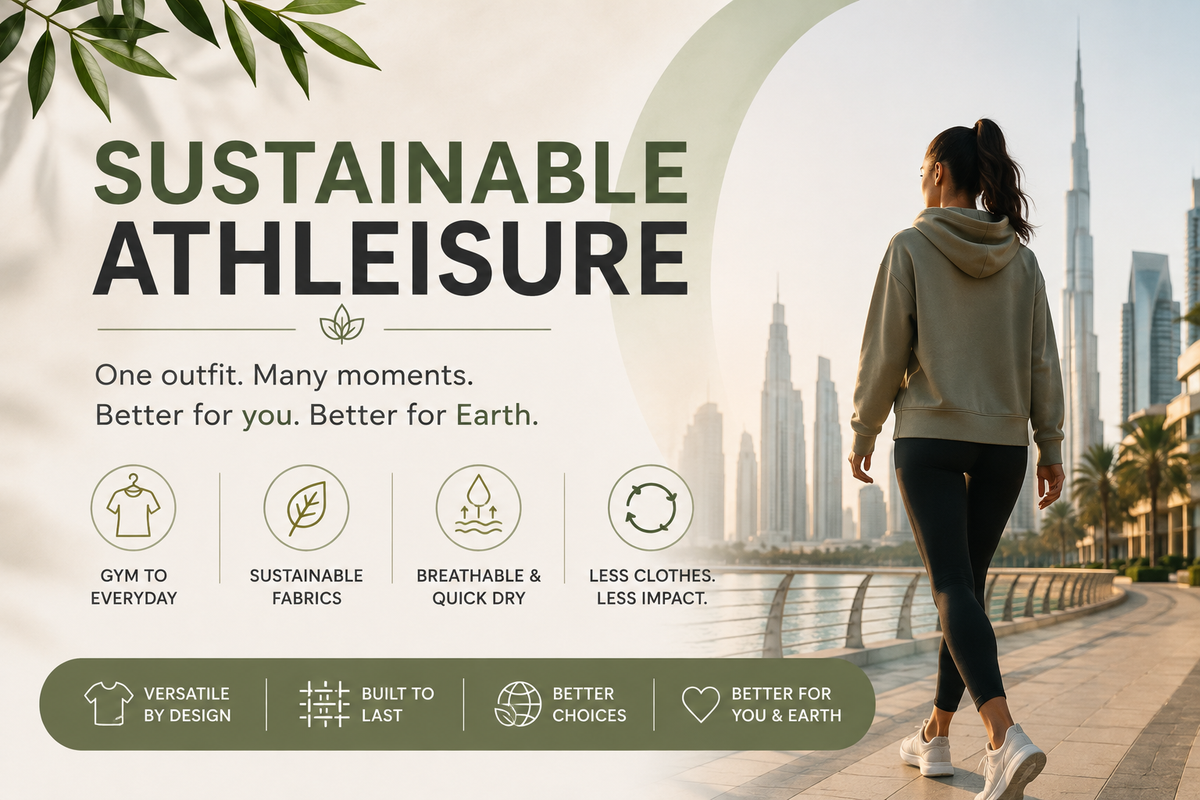
Short answer: Athleisure has genuinely stopped being gym-only clothing — a striking 72% of consumers now own athleisure specifically for non-athletic activities, and "gym to street style" searches have risen 55% since 2024. For sustainability specifically, this shift is actually good news: fewer separate garment categories means fewer total pieces needed in a wardrobe, which is the underlying mechanism behind sustainable fashion actually working.
The trend isn't just aesthetic — it's a real behavior shift
The global athleisure market has grown past $450 billion, and the driving force behind it isn't fashion cycling, it's how people actually live now: commuting, running errands, working from home, and squeezing in a workout increasingly happen in the same outfit rather than requiring a wardrobe change between each. That's worth noting specifically because it changes the sustainability math — a piece worn for a workout, then errands, then a casual coffee, gets more total wear per garment than something confined to a single-purpose category.
What "sustainable athleisure" specifically needs to deliver
Given that these pieces now cover a wider range of activities than pure gym wear, the fabric bar is genuinely higher: it needs real stretch and shape recovery, functional moisture management, comfort for both high-intensity movement and all-day casual wear, and durability across more frequent use than a single-purpose gym piece would see. This is a stricter version of the general activewear sustainability challenge covered elsewhere in this series — athleisure has to do more, for longer, across more contexts.
The fabric approach that's actually gaining ground
Rather than a single "best" fabric, the more useful current trend is thermal-regulating, biodegradable-where-possible fabrics that don't force a hard tradeoff between performance and impact — moving away from the older assumption that "sustainable" and "high-performance" were necessarily in tension. Recycled polyester remains common for genuine high-intensity pieces (with the microplastic tradeoff covered in our recycled polyester piece), while natural and engineered natural fibers are increasingly viable for the "everyday, lower-intensity" end of the athleisure spectrum specifically because that segment doesn't need peak synthetic wicking performance the way a genuine training session does.
Why versatility itself is the sustainability lever here
This is worth stating directly rather than assuming it's obvious: a single well-made piece that functions across workout, errands, and casual social wear replaces what would otherwise be three separate purchases. That's not a minor efficiency — it's the single most effective sustainability decision available in this category, arguably more impactful than any specific fabric choice, since it reduces total production demand rather than just shifting which material gets produced.
What to actually look for in a versatile piece
- A fabric that performs adequately across intensity levels — not necessarily peak performance at either extreme, but reliable comfort from workout through errands.
- A silhouette that doesn't read as "gym clothes" in a casual or semi-social setting — this is a styling question as much as a fabric one.
- Durability rated for more frequent wear than single-purpose activewear, since a genuinely versatile piece gets used more often across more contexts.
- The same sustainability scrutiny as any other category — a named material, real certification, not just "athleisure" as a vague catch-all descriptor.
Why this matters even more in UAE heat specifically
UAE life genuinely compresses activity types into fewer changes of clothes — the same heat that makes people avoid unnecessary outfit changes between the gym, errands, and casual outings also makes a single breathable, quick-dry piece more practically valuable here than in climates where changing outfits between activities is less of a burden. The athleisure trend's core premise (fewer pieces, more versatility) maps onto UAE daily life more naturally than it does onto milder climates where the "gym to street" transition was a bigger behavioral leap.
Where Okapi fits this trend
Our lotus fiber activewear line, covered in more depth in our men's activewear piece, was built specifically around this lower-to-moderate intensity, gym-to-errands use case — yoga, walking, daily heat exposure — rather than positioned as peak-performance training gear. That's a deliberate fit with exactly this trend, not a coincidence: versatile, breathable, quick-dry pieces suited to a full UAE day rather than a single workout window.
Frequently asked questions
Is athleisure actually more sustainable than owning separate gym and casual wardrobes?
It can be — a single versatile piece replacing multiple single-purpose garments reduces total production demand, which is arguably a more effective sustainability lever than any specific fabric choice alone.
What fabric works best for genuinely versatile athleisure?
Depends on intensity range needed — recycled polyester blends for high-intensity training-to-street pieces, natural or engineered natural fibers for lower-to-moderate intensity everyday versatility.
Why has athleisure use expanded so much beyond the gym?
Real behavior change — 72% of consumers now own athleisure specifically for non-gym activities, driven by lifestyles that compress commuting, errands, and workouts into the same day without separate outfit changes.
Does UAE heat make athleisure more or less practical than in other climates?
More practical — heat discourages unnecessary outfit changes between activities, making a single versatile, breathable piece more genuinely useful in daily UAE life than in milder climates.