

Sustainable Sweatpants and Hoodies: A Comfort Guide
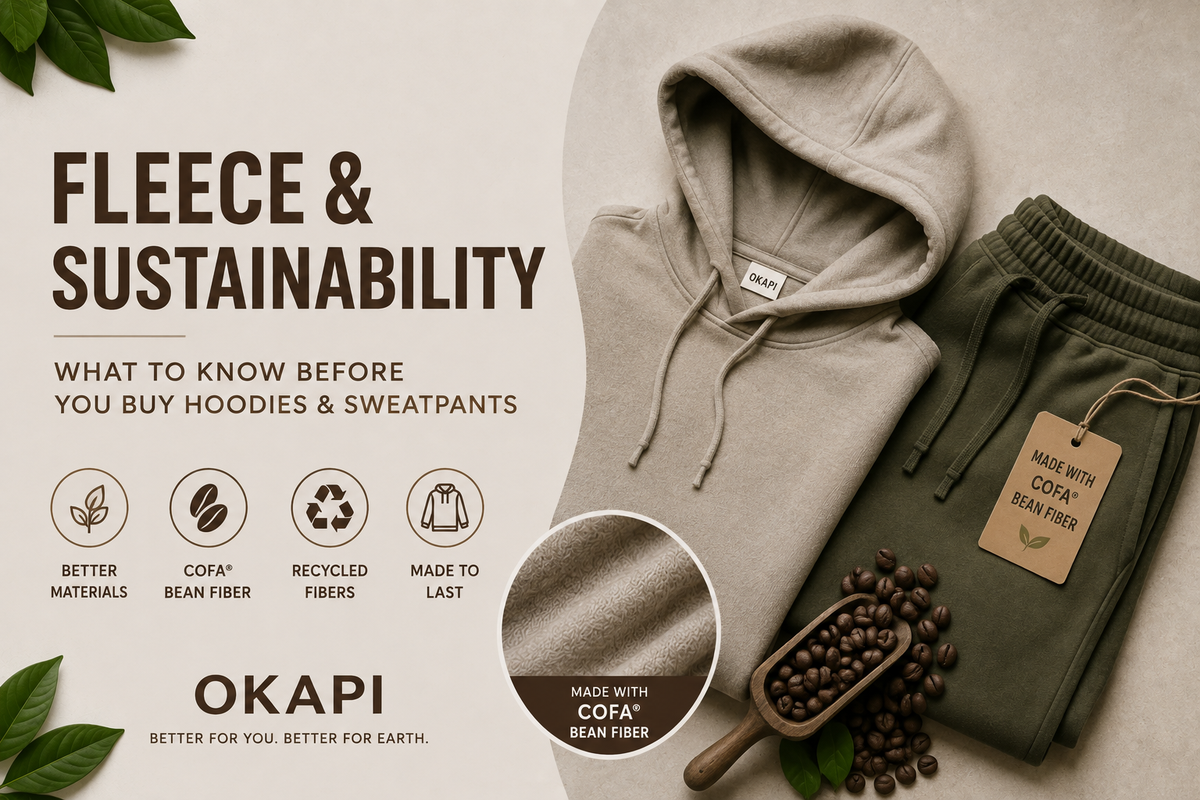
Short answer: "Fleece" specifically is a harder sustainable-fashion category than most people assume — genuine non-synthetic fleece is actually difficult to find, since the fuzzy texture most people associate with hoodies and sweatpants comes from a process traditionally built around synthetic fiber. Brushed organic cotton is the real alternative worth knowing about, achieving similar softness through a different, cleaner method.
The fleece problem, stated honestly
Worth naming directly: one of the most common materials used for sweatpants and hoodies is virgin polyester fleece — a fossil-fuel-derived synthetic that sheds microplastics when washed and doesn't biodegrade, the same core issue covered throughout our recycled polyester and materials pieces. If you're specifically shopping for the classic "fleece" texture, it's genuinely difficult to find that isn't synthetic in some form — even sustainable brands often use recycled polyester fleece rather than a non-synthetic alternative, which is meaningfully better than virgin material but still carries the shedding tradeoff.
Brushed organic cotton — the real non-synthetic alternative
This is the option worth actively seeking out if avoiding synthetics matters to you: brushed organic cotton achieves a soft, cozy backing through combing the fibers mechanically, rather than through the synthetic fleece structure. It won't feel identical to classic polyester fleece, but it delivers genuine softness and warmth without the microplastic-shedding tradeoff — a real alternative, not a compromise dressed up as one.
What to look for regardless of fabric choice
- GOTS certification for organic cotton claims specifically — covering cultivation through manufacturing, not just the raw fiber.
- OEKO-TEX 100 or Bluesign for chemical safety in dyeing and processing.
- GRS (Global Recycled Standard) if the piece includes recycled polyester — verifies the recycled content claim rather than accepting it as a marketing statement.
- Fair Trade certification where available, for labor conditions specifically, same standard as covered throughout this series.
The blend question — is 70% organic cotton good enough?
Worth addressing directly since it comes up often: some accessible-price hoodies and sweatpants use a blend like 70% organic cotton, 30% recycled polyester rather than 100% organic cotton. This isn't a failure or a compromise to dismiss — the recycled polyester component adds durability and structure at a lower cost point than full organic cotton, and it's a meaningfully better choice than a garment using virgin synthetic fleece entirely. A partial-organic blend with disclosed percentages beats a vague "eco-friendly" claim with no breakdown at all.
The honest UAE relevance question
Worth addressing directly: heavyweight hoodies and sweatpants are a genuinely lower-priority category for daily UAE wear compared to the breathable basics covered elsewhere in this series — this is AC-office, winter-travel, or cooler-evening clothing here, not daily outdoor wear. That's not a reason to skip sustainable sourcing when you do need these pieces, just a reason this category won't be where most of a UAE wardrobe's environmental footprint or daily rotation actually sits.
Where Okapi fits, honestly
Hoodies and heavyweight sweatpants aren't currently part of our product line — our materials (coffee-ground fabric, lotus fiber) are engineered specifically for breathability and quick-dry performance, which is the opposite design goal from cozy, heat-retaining fleece. If this category is what you're shopping for, brands like Pact, Harvest & Mill, or Girlfriend Collective (covered elsewhere in this series for their broader size range) are better-suited starting points than our current catalog.
Frequently asked questions
Is it actually possible to find non-synthetic fleece?
Genuinely difficult — the classic fleece texture is traditionally achieved through synthetic fiber structure, so brushed organic cotton is the real non-synthetic alternative rather than an exact substitute.
Is a 70% organic cotton / 30% recycled polyester blend a bad sustainability choice?
No — it's a reasonable middle-ground option, meaningfully better than virgin synthetic fleece, and often more accessible in price than 100% organic cotton pieces.
Why aren't hoodies and sweatpants a bigger priority for a UAE wardrobe?
Heavyweight, heat-retaining fabric is genuinely less relevant to daily UAE outdoor life compared to breathable basics — this category is more for AC-heavy settings, winter travel, or cooler evenings than everyday wear here.
Does Okapi make hoodies or sweatpants?
Not currently — our materials are engineered specifically for breathability rather than the heat-retaining structure this category typically requires.