

Sustainable T-Shirts: The One Basic Worth Upgrading
Short answer: If you're only going to make one category of your wardrobe sustainable first, a plain t-shirt is the strongest starting point — it's worn most frequently of any garment type, meaning fabric quality and sourcing get amortized across the most wears per item, and organic cotton versions now exist at genuinely accessible prices (Pact's basics run under $50), not just premium ones.
Why the t-shirt specifically, not another category
This is a practical argument, not just an ethical one: most people wear a t-shirt more often than almost anything else in their wardrobe — daily, in some form. Reviewers who track this closely report wearing a t-shirt and jeans or sweatpants nearly every day. That frequency means the fabric quality decision compounds faster here than for an occasion dress or a coat worn a handful of times a year. Upgrading the most-worn item in your closet moves the needle more than upgrading a rarely-worn one, even if the rarely-worn piece feels like the bigger purchase.
The price range reality, stated honestly
Organic cotton tees are genuinely not as cheap as fast-fashion basics — that's a fair thing to say plainly rather than oversell. But the range has widened meaningfully: Pact's GOTS-certified, Fair Trade, carbon-neutral basics run under $50, while more premium organic options sit in the $34-76 range depending on brand and design complexity. This isn't a single price point — there's real room to choose based on budget while still getting a genuinely certified product, not just a "sustainable-adjacent" one.
What actually held up in independent testing
Worth citing specifically: one tester who washed ten organic cotton tees from different brands ten times each to compare durability found genuine differences in shape retention and wrinkle resistance — not every "organic cotton tee" performs identically, even among certified options. This reinforces a point made throughout this series: certification tells you about sourcing and labor, but construction quality (a separate question, covered in our men's tee durability piece) still needs independent evaluation.
The versatility case, concretely
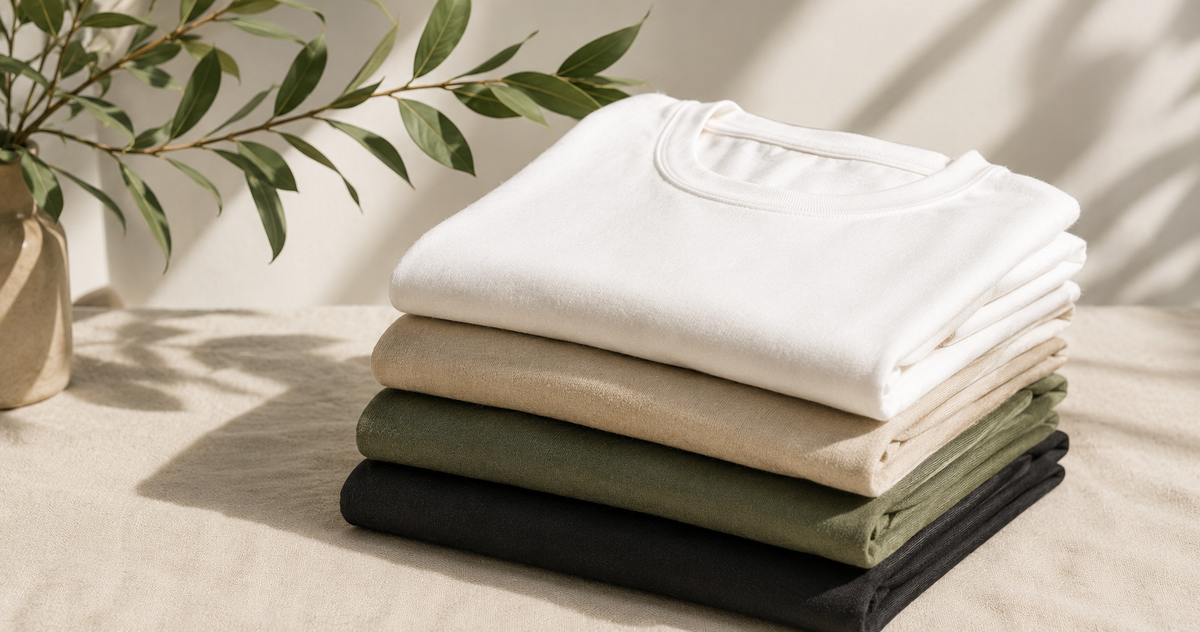
A plain, well-made tee genuinely does more styling work than almost any other single piece — dressed down with sweatpants for errands, layered under a blazer for a meeting, paired with a skirt for a casual outing. That versatility is itself a sustainability argument: fewer single-purpose pieces needed when one basic tee covers multiple contexts, the same underlying logic covered in our athleisure and loungewear pieces.
What to actually check before buying
- GOTS certification specifically, not just "organic cotton" as an unverified claim — per our organic cotton certification breakdown.
- Construction details — ring-spun or combed cotton, reinforced seams — covered in full in our tee-durability piece, since certification and construction quality are separate questions.
- Actual price-per-wear math, not just sticker price — a $45 tee worn weekly for three years costs less per wear than a $12 fast-fashion tee replaced four times over the same period.
- Fit and cut versatility — a genuinely mix-and-match piece justifies its cost more than a trend-specific cut.
Where Okapi's Café Tee fits this argument
Building on the durability logic from our earlier tee piece — where we noted staining, odor, and shape loss are the actual reasons tees get replaced, not fabric wearing out — coffee-ground fabric's natural odor resistance directly targets one of those failure points specifically. Positioned at a mid-range price point rather than premium, the goal is the same "most-worn, most-upgraded" logic this piece is making generally: the item worn most often is the one worth investing in first.
Frequently asked questions
Why upgrade a t-shirt before other wardrobe pieces?
Because it's typically the most frequently worn garment type, so fabric quality and sourcing decisions compound across more total wears than for occasion-specific pieces.
Are sustainable t-shirts always significantly more expensive than fast fashion?
More expensive per item, yes, but the range is wider than assumed — accessible options like Pact run under $50, and cost-per-wear often favors the durable option over a repeatedly-replaced cheap tee.
Does organic cotton certification guarantee good construction quality too?
No — certification (GOTS, Fair Trade) verifies sourcing and labor standards, while construction quality (stitching, fiber grade, GSM) is a separate question worth evaluating independently.
What makes a t-shirt genuinely versatile enough to justify the investment?
A simple, well-constructed cut in a neutral color that works dressed up or down across multiple contexts — errands, layering, casual outings — rather than a trend-specific design.