

Sustainable Underwear Brands: An Honest Guide
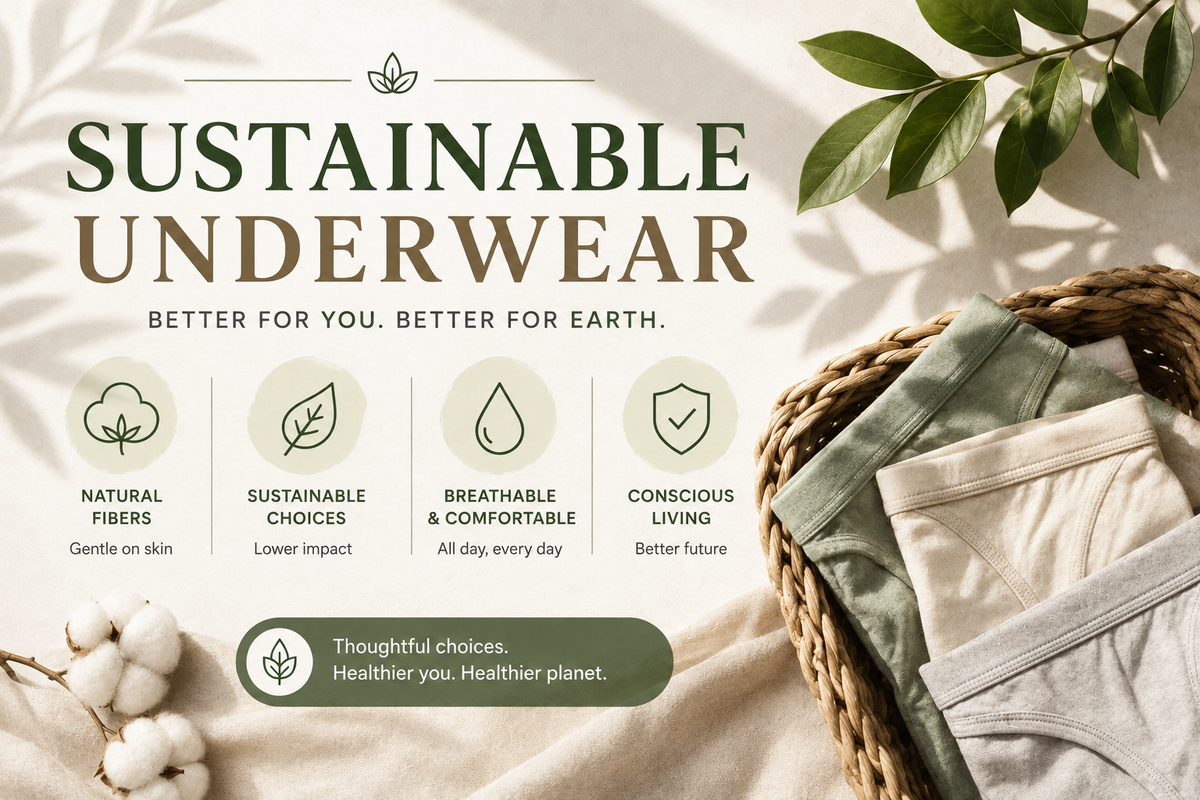
Short answer: For underwear specifically, natural fiber matters more than in almost any other clothing category — this is fabric worn directly against sensitive skin, for hours, daily. Organic cotton, hemp, and Tencel are the genuinely strong choices. Bamboo deserves a specific caveat: nearly all "bamboo" underwear is actually bamboo viscose, not the cleaner closed-loop bamboo lyocell process, and the two get marketed identically despite a real difference in production impact.
Why underwear deserves more scrutiny than other garment categories
This is worth stating plainly rather than assuming it's obvious: synthetic underwear fabric can shed microplastic particles in direct, sustained contact with intimate skin, and organic cotton specifically reduces moisture buildup and irritation risk compared to the polyester blends that dominate conventional underwear. This isn't purely an environmental argument the way it is for, say, a jacket — there's a genuine personal health dimension specific to this category that makes fabric choice matter more here than for most clothing.
The bamboo underwear caveat, explained properly
Here's the detail almost no underwear guide states clearly: bamboo grown as a raw crop is genuinely low-impact, but turning it into soft underwear fabric almost always uses the bamboo viscose process — dissolving the plant in chemicals and reforming it into fiber, which is meaningfully more chemically intensive than the closed-loop bamboo lyocell process. The "closed-loop" and "non-toxic" claims frequently seen on bamboo underwear packaging technically only apply to the lyocell version — and as of current research, essentially no brand makes bamboo lyocell underwear specifically. If bamboo's silky feel and moisture-wicking properties matter more to you than the production-method distinction, that's a legitimate personal tradeoff — but it should be a conscious one, not an assumption that "bamboo" automatically means "clean process."
The stronger natural-fiber options for this category
- Organic cotton — the most consistently recommended choice, breathable, lower irritation risk, widely available at accessible prices (Pact remains a strong pick here, same as in our men's and women's brand lists).
- Hemp — genuinely low-impact to grow, durable, holds up well through repeated washing — a solid but less common underwear-specific option.
- Tencel/modal — soft, good moisture management, a strong middle-ground choice between cotton's simplicity and bamboo's marketed (if sometimes overstated) softness.
Brands worth knowing, and what makes each specific
Pact — accessible, Fair Trade-certified organic cotton, consistent with its strong showing across men's and women's basics elsewhere in this series.
Organic Basics — B Corp certified, working across organic cotton, Tencel Lyocell, and recycled nylon, with transparent, disclosed manufacturing standards rather than vague claims.
Boody — bamboo viscose specifically (with the caveat above acknowledged), third-party certified through Ecocert, SGS ISO, and WRAP — genuinely certified, just worth understanding which specific process that certification covers.
Subset — female-founded, focused specifically on organic cotton with fair-trade sourcing, positioned as a more singular-material specialist than a multi-fabric generalist.
What to actually check before buying
- A named fiber and, ideally, a named process — "organic cotton" or "Tencel Lyocell" tells you more than "eco-friendly fabric."
- If bamboo, ask specifically about viscose vs. lyocell — most brands won't volunteer this distinction unprompted.
- Real certification — GOTS, OEKO-TEX, Fair Trade, B Corp — the same standard as anywhere else in this series, applied to a category where it arguably matters most.
- Transparent, disclosed manufacturing — a brand willing to show its supply chain, not just claim ethical sourcing in general terms.
Where Okapi fits, honestly
Underwear specifically isn't currently part of our product line — our coffee-ground and lotus fiber materials are built around outer garments (polos, tees, activewear) rather than intimate wear, and we haven't done the specific research needed to make a responsible claim about how those materials perform against sensitive skin over sustained daily contact. If underwear is what you're shopping for, the brands above are a more appropriate and better-researched starting point than looking to us for this category.
Frequently asked questions
Is bamboo underwear actually as clean as it's marketed?
Mostly not fully — nearly all bamboo underwear uses bamboo viscose, a more chemically intensive process than the cleaner closed-loop bamboo lyocell method the "non-toxic" and "closed-loop" marketing claims technically only apply to.
Why does fabric choice matter more for underwear than other clothing?
Sustained, direct contact with sensitive skin increases both potential microplastic exposure from synthetics and irritation risk from moisture retention — a more personal-health-relevant concern than for outerwear.
What's the single most reliable natural fiber for underwear?
Organic cotton remains the most consistently recommended, accessible, and widely available option with the least production-process ambiguity compared to bamboo.
Does Okapi make underwear?
Not currently — our product line focuses on outer garments, and we haven't done the specific skin-contact research needed to responsibly extend our materials into intimate wear.