

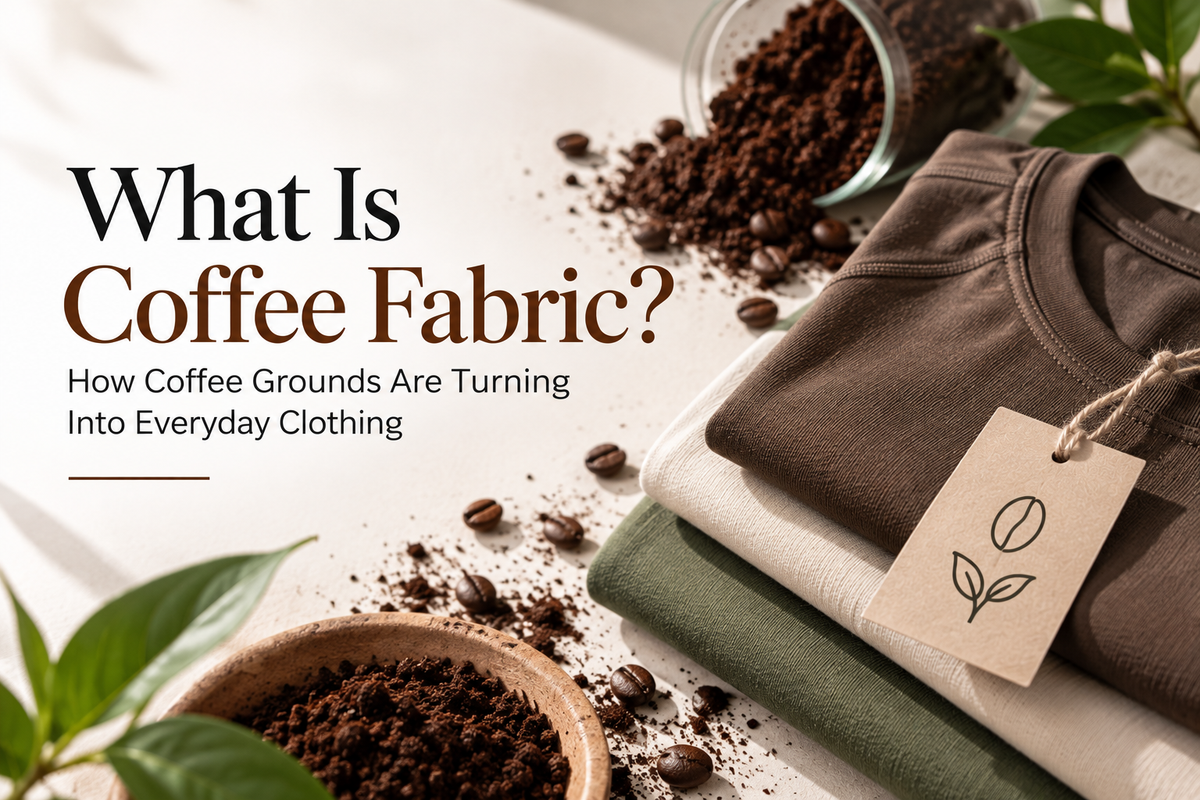
What Is Coffee Fabric? How Coffee Grounds Are Turning Into Everyday Clothing
You drink the coffee.
But what happens to the grounds?
Usually, that's where the story ends.
Textile innovation is creating another possibility: processed coffee-derived material can be incorporated into fibers used to make fabric.
Welcome to the world of coffee fabric.
What Is Coffee Fabric?
Coffee fabric generally describes textiles that incorporate material derived from processed spent coffee grounds.
This doesn't mean your T-shirt is made simply by grinding coffee and spinning it into yarn.
The grounds must undergo specialized processing before coffee-derived material can become part of a textile fiber or fabric system.
The exact construction and percentage of coffee-derived content can vary between textile technologies and garments.
Does Coffee Clothing Smell Like Coffee?
This is probably the first question people ask.
Coffee-based fabric is not designed to make you walk around smelling like a cappuccino.
The coffee grounds have been processed before their material is incorporated into textile production.
The appeal is the material innovation, not a coffee fragrance.
Why Put Coffee Grounds Into Fabric?
Because one industry's by-product can potentially become another industry's input.
Billions of cups of coffee are consumed around the world, creating enormous quantities of spent coffee grounds.
Textile innovation asks an interesting question:
What else could this material become?
That's what makes coffee-derived textiles fascinating.
They represent a different way of thinking about resources.
What Does Coffee Fabric Feel Like?
There isn't one universal "coffee fabric feel."
The finished texture depends on the complete textile construction: other fibers in the blend, yarn structure, knitting or weaving, finishing and garment design.
This is an important distinction.

Coffee-derived material may be one component of the textile rather than the entire fabric.
Consumers should therefore evaluate the actual garment rather than assuming every coffee-based textile will perform identically.
Coffee Meets Fashion at Okapi
At Okapi Lifestyle, coffee isn't simply a marketing theme.
It inspired an entire material story.
Our Café collection brings coffee-derived textile innovation into modern everyday silhouettes including polos, tees, tanks and socks.
The idea is intentionally simple:
Take something incredibly familiar—coffee—and let people experience it from an entirely different perspective.
Drink Coffee. Dress Coffee.
But innovation alone isn't enough.
The finished garment still needs to look premium, feel contemporary and fit naturally into everyday life.
Because the best material story is one you actually want to wear.
Coffee Fabric and Sustainable Fashion
Coffee-derived textile technology can contribute to a broader conversation about finding additional uses for by-products.
However, the presence of coffee-derived material alone does not automatically make an entire garment "sustainable."
A garment's broader impact depends on multiple factors, including its complete fiber composition, processing, manufacturing, durability, transportation and eventual disposal.
That context matters.
Responsible fashion communication should celebrate innovation without turning it into an exaggerated environmental promise.
Why Coffee Clothing Is Interesting for the Future
For decades, most consumers thought about clothing using a familiar vocabulary:
Cotton.
Wool.
Polyester.
Linen.
The next generation of fashion is expanding that vocabulary.
Coffee grounds.
Lotus stems.
Banana plants.
Pineapple leaves.
Recycled resources.
These materials encourage designers and consumers to reconsider what can become part of a textile.
And that's perhaps the most exciting thing about coffee fabric.
It changes the question from:
"What is clothing made from?"
to:
"What could clothing be made from?"
Frequently Asked Questions
What is coffee fabric made from?
Coffee fabric typically refers to textiles incorporating processed material derived from spent coffee grounds alongside other textile fibers.
Are clothes made entirely from coffee grounds?
Generally, no. Coffee-derived material is typically incorporated into a textile system or blended construction rather than clothing being made from raw coffee grounds alone.
Does coffee fabric smell like coffee?
Processed coffee-based textiles are not designed to smell like brewed coffee.
Is coffee fabric sustainable?
Using a by-product as a textile input can be relevant to sustainability discussions, but the sustainability of an entire garment depends on its complete materials, production, durability and lifecycle.
Can coffee grounds really become clothing?
Through specialized textile processing, coffee-derived material can be incorporated into fibers and fabrics used for clothing.
Where can I buy coffee-based clothing?
Okapi Lifestyle's Café collection explores coffee-derived textile innovation across modern everyday clothing.
Your Coffee Has Another Story
Tomorrow morning, when you finish your coffee, look at what's left behind.
Most people see grounds.
We see possibility.
Drink Coffee. Dress Coffee.
Okapi Lifestyle — Nature in Every Thread.