

Sustainable Clothing Brands in 2026: What Makes a Fashion Brand Truly Sustainable?
Search for sustainable clothing brands today and you'll find thousands of companies describing themselves as conscious, responsible, green or environmentally friendly.
The difficult part isn't finding the claims.
It's understanding what they actually mean.
Rather than relying on a single word on a product page, shoppers can evaluate fashion brands across several important areas.
1. Material Transparency
Start with one of the simplest questions:
What is the garment actually made from?
A responsible fashion conversation should make materials easier—not harder—to understand.
Look for specific fiber information and explanations of why particular materials were selected.
This becomes especially important as fashion moves beyond conventional cotton and polyester toward recycled and alternative textile inputs.
2. Evidence Behind Environmental Claims
Words such as "green", "eco-friendly" and "sustainable" can sound impressive without providing much information.
Better communication explains what is different.
Is recycled material being used?
Is an agricultural by-product incorporated into the textile?
Does a claim apply to the entire garment or only one component?
Specificity helps consumers make informed decisions.
3. Clothing Designed to Be Worn
Sustainability isn't only about how clothing begins.
It is also about how clothing is used.
A beautifully made garment that remains unworn in a wardrobe provides little practical value.
Look for pieces that combine comfort, versatility and timeless design so they can become regular parts of everyday life.
4. Durability Matters
Fashion becomes more considered when we stop thinking only about the purchase and start thinking about the garment's useful life.
Ask:
Will I still want to wear this next year?
Can it work across multiple settings?
Does the construction feel appropriate for repeated use?
Longer-lasting style doesn't have to mean boring style.
It means designing beyond the next trend cycle.
5. Innovation Can Be Part of Sustainability
The next generation of sustainable fashion brands isn't necessarily returning exclusively to traditional materials.
Many are looking forward.
Material innovation is creating fascinating possibilities using recycled resources, plant-derived fibers and by-products from other industries.
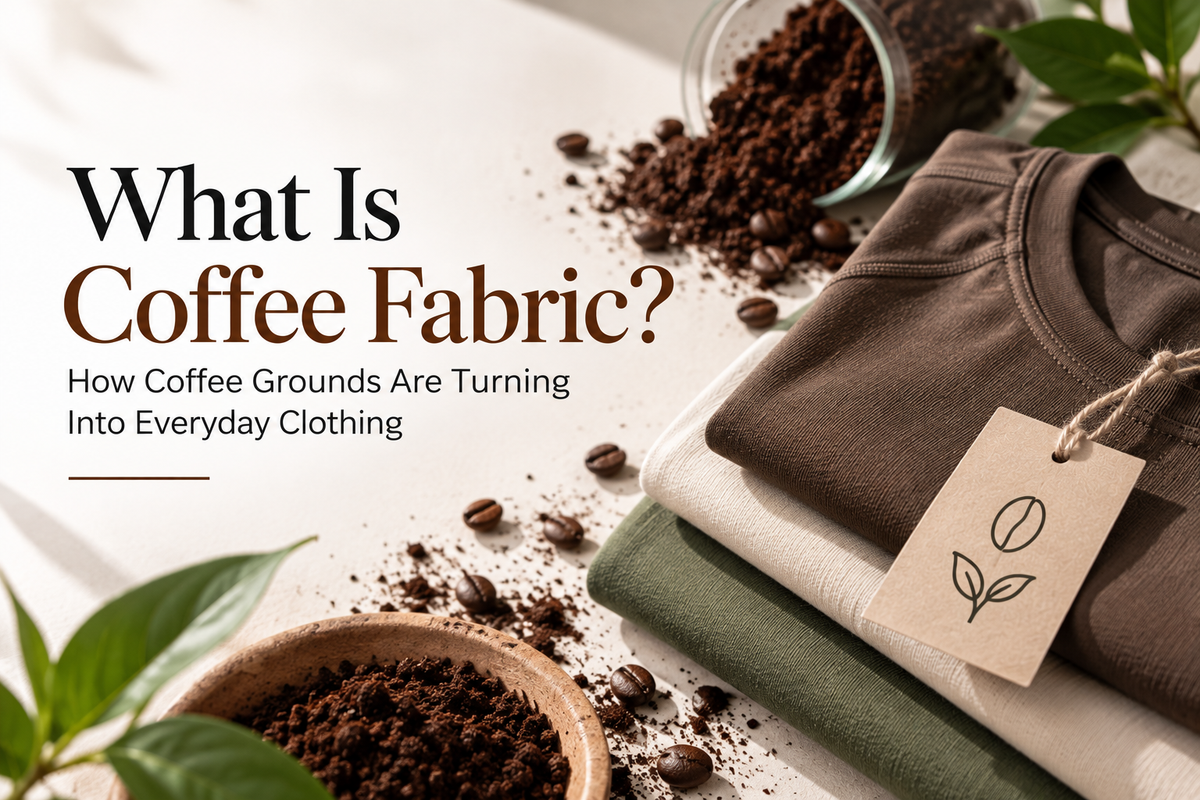
Coffee is one example.
Rather than seeing spent coffee grounds only as waste, textile technology can process coffee-derived material for incorporation into fibers and fabrics.
Other emerging material stories involve lotus, banana and pineapple plants.
The opportunity is bigger than creating unusual fabrics.
It's about reconsidering what a raw material can be.
Where Okapi Fits
At Okapi Lifestyle, our philosophy begins with a simple idea:
Nature in Every Thread.
We explore innovative materials and contemporary textile technologies while keeping the finished clothing premium, minimal and wearable.
That means the material story should never overwhelm the product.
A polo still needs to look like something you want to wear.
A T-shirt still needs to feel appropriate for everyday life.
Innovation matters most when it becomes useful.
That's why you'll find material stories across Okapi involving coffee, lotus, bamboo, banana, pineapple, mint, charcoal and recycled fibers.
How to Compare Sustainable Clothing Brands
Instead of asking only, "Is this brand sustainable?", ask:
What materials does it use?
How clearly does it explain them?

Are environmental claims specific and credible?
Is the clothing designed for repeated wear?
Does the product offer something beyond marketing language?
These questions provide a much stronger basis for comparison.
Frequently Asked Questions
What makes a clothing brand sustainable?
There is no single qualification. Material selection, sourcing, manufacturing, working conditions, transportation, packaging, durability and end-of-life considerations can all contribute.
How can I tell if a sustainable fashion claim is genuine?
Look for specificity and evidence. Be cautious when broad environmental claims are presented without information explaining what makes the product different.
Are sustainable clothing brands always more expensive?
No. Pricing varies considerably, although alternative materials, smaller production volumes, quality construction and specialized manufacturing can affect costs.
Are natural fabrics always better?
Not automatically. Environmental impact depends on the entire lifecycle of a material rather than whether its original source is natural or synthetic.
What is the future of sustainable clothing?
Material innovation, circularity, improved traceability, longer product lifecycles and more transparent communication are likely to remain important themes.
Don't Just Buy the Label
The most meaningful shift in sustainable fashion may not be a new fabric or certification.
It may be a more informed consumer.
Read labels.
Question claims.
Understand materials.
Choose clothing you'll actually wear.
Because better fashion decisions begin long before checkout.
Okapi Lifestyle — Nature in Every Thread.