

What Is Coffee Fabric? The Science Behind Okapi's Sustainable Innovation
From Your Morning Cup to Your Wardrobe
Every morning, millions of people across the UAE and the world brew a cup of coffee and discard the grounds. These spent coffee grounds, once considered nothing more than kitchen waste, are now at the heart of one of fashion's most exciting sustainable innovations.
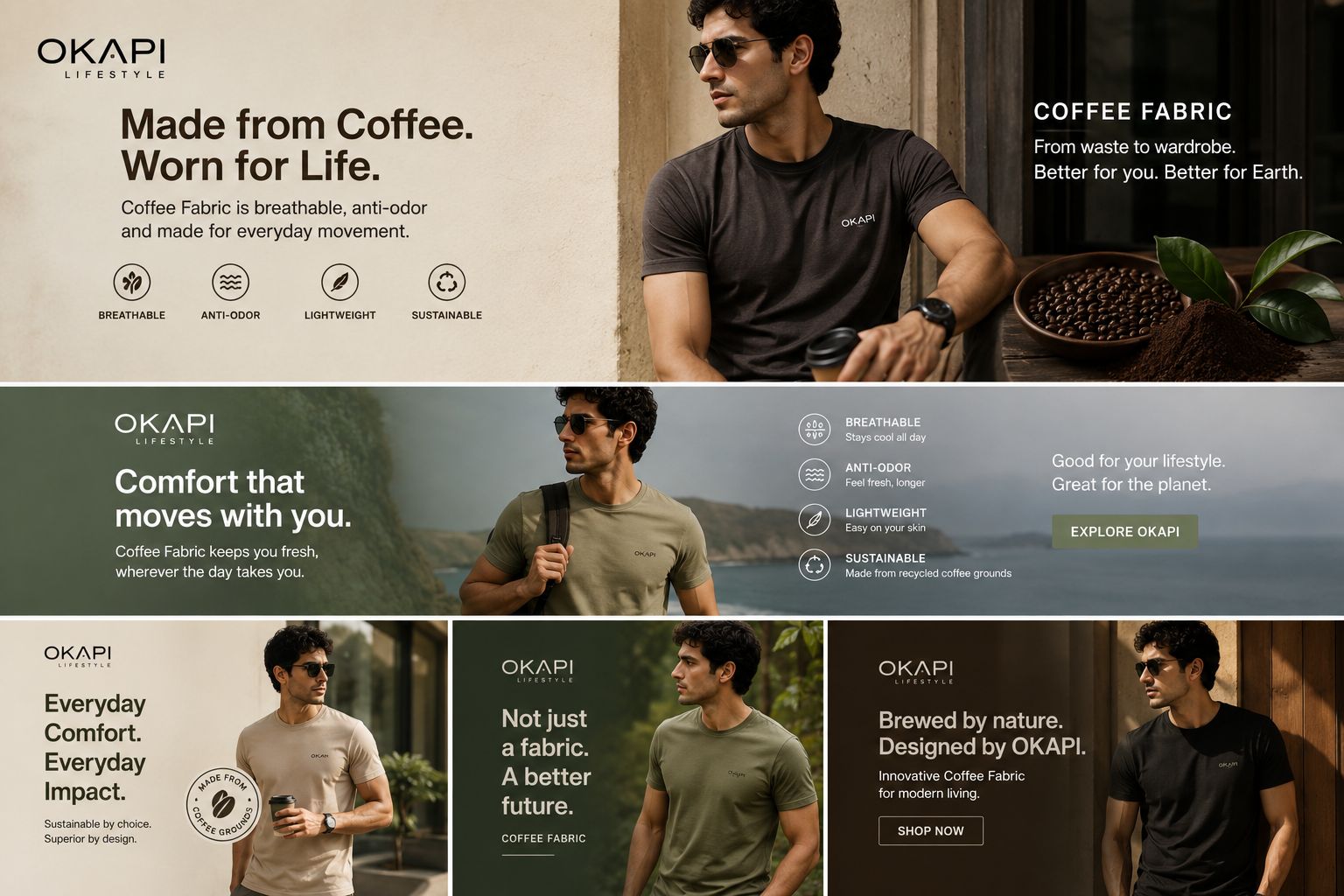
At Okapi Lifestyle, our Café collection — the Café Polo, Café Tee, Café Air Tank, and Café Socks — is woven from recycled coffee grounds transformed into premium performance fabric. Here is how it works, and why it matters.
How Coffee Fabric Is Made
The process of turning coffee grounds into wearable fabric is a fascinating example of circular manufacturing. Spent coffee grounds are collected from coffee producers and roasters, then dried and processed into a fine powder. This powder is blended into yarn during the spinning process, creating a textile that carries the natural functional properties of coffee — most notably its remarkable ability to absorb and neutralize odour molecules — while delivering the softness, breathability, and durability expected of premium fashion.
Why Coffee Fabric Performs Better
Natural Odour Resistance
Coffee grounds are naturally porous and have been used for centuries to absorb odours. When integrated into fabric at the fibre level, this property works continuously — neutralizing sweat and body odour naturally, without chemical treatments or synthetic deodorizers. The Okapi Café Polo can be worn through a full working day in Dubai's heat without the freshness concerns that come with conventional cotton.
Quick-Dry Performance
The open-weave structure of coffee fibre allows moisture to wick away from the skin and evaporate rapidly. For professionals navigating UAE summers — moving between air-conditioned offices and 40°C outdoor heat — this moisture management is practical daily comfort, not a luxury.
UV Protection
Coffee fibre provides a natural degree of UV protection, filtering harmful rays during outdoor exposure. In the UAE's intense sun environment, this adds a functional layer of protection that conventional light fabrics do not offer.
Lightweight Breathability
The resulting fabric is significantly lighter than standard cotton while maintaining structural integrity — ideal for warm-climate dressing in the Gulf region.
The Environmental Case
Global coffee production generates millions of tonnes of spent grounds annually. The vast majority ends up in landfill, producing methane as it decomposes — a greenhouse gas significantly more potent than carbon dioxide. By diverting these grounds into fabric production, coffee fibre clothing participates in a genuine circular economy. No virgin cotton fields. No new synthetic petroleum-based fibres. Just a material that was already produced and already used — redirected into something purposeful.
Who Is Coffee Fabric Clothing For?
Coffee fabric clothing is for anyone who values both performance and purpose in their wardrobe. The Okapi Café collection has been designed specifically for UAE professionals — people who move through diverse environments in a single day, who are increasingly conscious of their purchasing choices, and who refuse to accept that sustainable fashion means sacrificing quality or style.