

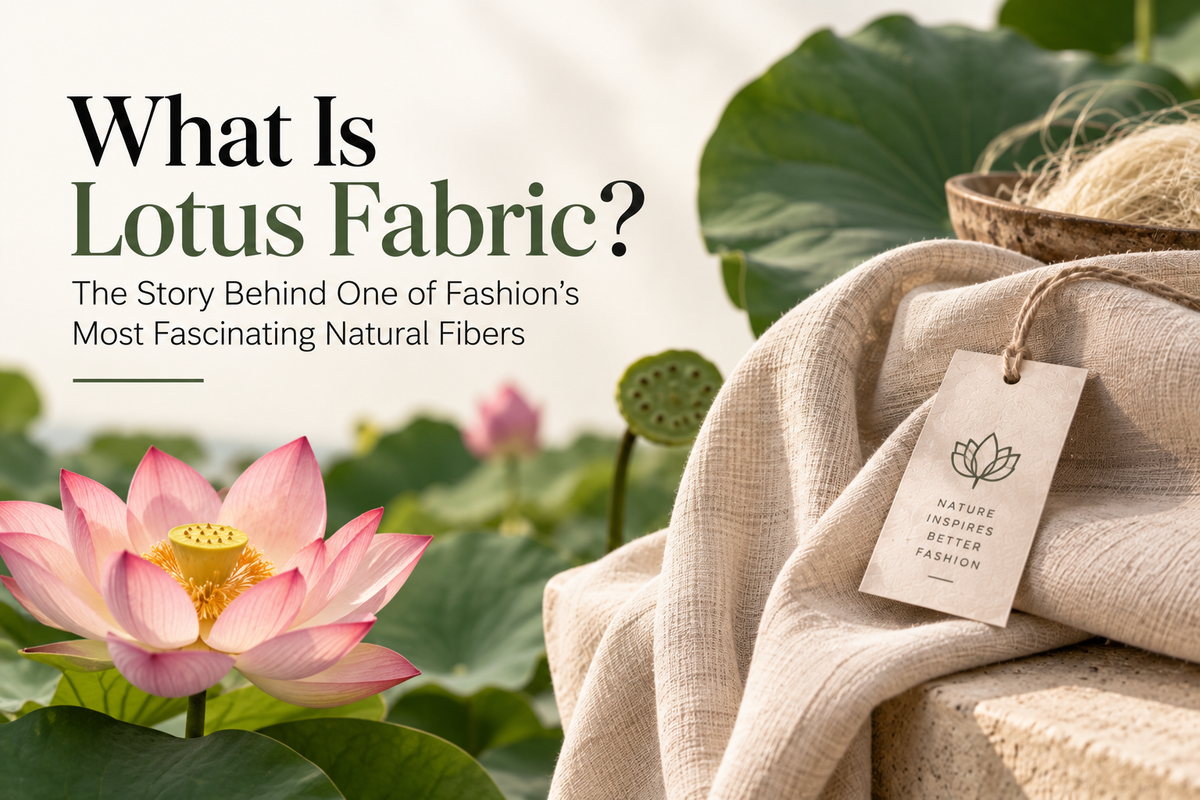
What Is Lotus Fabric? The Story Behind One of Fashion's Most Fascinating Natural Fibers
For thousands of years, the lotus has represented beauty and renewal across cultures.
Today, it has another fascinating story.
Fashion.
What Is Lotus Fabric?
Lotus fabric traditionally refers to textile made using fibers obtained from lotus plant stems.
The fiber can be extracted from the fine filaments inside the stem and processed into yarn.
Traditional lotus-fiber production is highly specialized and labor intensive, which helps explain why genuine hand-produced lotus textiles can be rare and expensive.
Modern garments described using lotus terminology may use different textile technologies or blends, so consumers should always examine the specific material composition rather than assuming every "lotus" product is made using the same process.
How Is Traditional Lotus Fiber Made?
After lotus stems are collected, they can be carefully cut and pulled apart.
Fine filaments emerge from inside the stem.
These filaments are drawn together, rolled and eventually turned into yarn before weaving.
It is an extraordinary example of how knowledge, craftsmanship and plant materials can intersect.
Why Is Lotus Interesting to Modern Fashion?
Lotus represents something larger than a novelty material.
It reminds us that fashion's raw-material vocabulary can extend beyond the handful of fibers most consumers recognize.
Plants can contain structures with surprising textile potential.
That same curiosity is driving experimentation involving banana stems, pineapple leaves and other agricultural resources.
Is Lotus Fabric Sustainable?
It depends on what exactly is being evaluated.
Using plant-derived materials can create interesting sustainability opportunities, but "plant-based" should not automatically be interpreted as "zero impact."
Sourcing, processing, transportation, blending, manufacturing, durability and end-of-life all matter.
Consumers should look for specific information about a garment rather than relying solely on the word "lotus."
Lotus Meets Contemporary Design
Material innovation becomes most powerful when it leaves the laboratory or artisan workshop and becomes relevant to modern life.
At Okapi Lifestyle, our Lotus story explores how nature-inspired textile innovation can meet contemporary clothing.
The objective isn't to make clothing look experimental.
It's almost the opposite.
Keep the silhouette clean.
Keep the aesthetic premium.
Let the material provide the conversation.
Frequently Asked Questions
What is lotus fabric?
Traditional lotus fabric is textile made from fibers extracted from lotus stems. Modern lotus-associated textiles can vary, so individual product composition should be checked.
Is lotus fabric rare?
Traditionally produced lotus fiber can be rare because extracting and processing the fibers requires considerable manual work and specialized expertise.
Where does lotus fiber come from?
The fibers used in traditional lotus textile production come from fine filaments within lotus stems.
Is lotus fabric expensive?
Traditional handmade lotus textiles can be expensive because of the labor-intensive production process. Modern lotus-related fabrics and blends may have very different pricing.
Is lotus clothing suitable for everyday wear?
That depends on the construction and blend of the particular garment rather than the lotus material story alone.
Nature Has More to Offer Fashion
We know the lotus as a flower.
Textile makers learned to see something else inside it:
Fiber.

That's what material innovation often begins with—not creating something from nothing, but looking differently at what already exists.
Okapi Lifestyle — Made from nature. Made better.