


Best Polo Shirts for Men in Dubai Heat
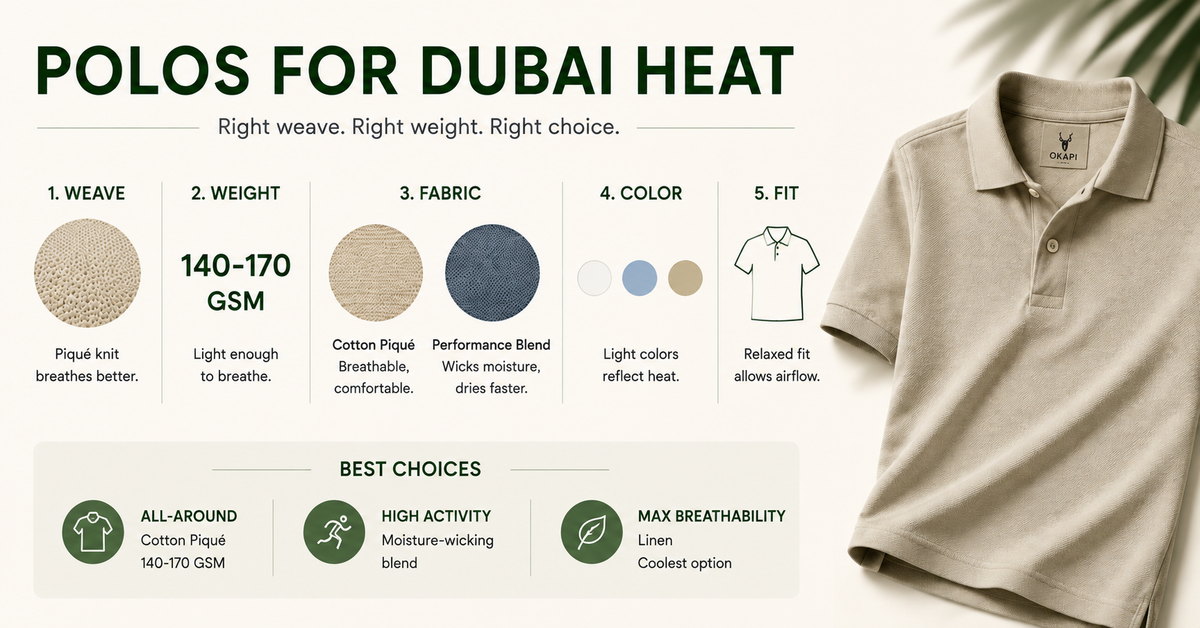
Short answer: For genuine Dubai heat, look for a piqué knit structure (not flat jersey), a fabric weight between 140-170 GSM, and either linen for maximum breathability or an engineered moisture-wicking blend for all-day activity. Traditional 100% cotton piqué is the reliable middle ground — breathable but not the fastest-drying option in humidity.
Why the weave matters more than the fiber alone
Most people evaluate a polo by fiber type — cotton vs. polyester — and skip the detail that actually determines comfort: the knit structure. Piqué knit, the traditional polo weave, has a textured, waffle-like surface that creates tiny air pockets between the fabric and skin, letting air circulate in a way a flat jersey knit (standard t-shirt fabric) doesn't. This is why a piqué cotton polo can feel noticeably cooler than a jersey cotton tee of the same fiber and thickness — the structure is doing real work, not just the material.
The GSM number worth actually checking
Fabric weight, measured in grams per square meter (GSM), has a real sweet spot for hot climates: roughly 140-170 GSM. Below 140 tends to lack durability and can look see-through; above 180 starts trapping heat even in an otherwise breathable weave. Most polo shirts don't list this number prominently, but it's worth asking about or checking the product description for if you're comparing options — it tells you more than "lightweight" as a vague marketing word does.
Cotton piqué vs. performance synthetic — the honest tradeoff
Standard cotton piqué is breathable and comfortable in dry heat, but cotton absorbs moisture rather than wicking it away — in genuinely humid conditions (which describes most of a Dubai summer), that means the fabric can end up feeling heavy and damp rather than staying dry. Performance polyester or poly-spandex blends wick moisture to the fabric's exterior where it evaporates faster, which is a real functional advantage for high-activity days — golf, sports, long outdoor stretches — at the cost of the natural-fiber feel some people prefer for everyday wear.

Independent air-permeability testing (using the ASTM D737 standard, which measures airflow through fabric) shows standard cotton piqué running around 60-90 cfm (cubic feet per minute), while engineered polyester piqué blends can reach 95-115 cfm or higher with an open-cell knit structure. Testers generally stop describing a polo as "stuffy" somewhere above 120 cfm — which is a genuinely useful number if you can find it for a specific shirt, though most brands don't publish it.
Color matters more than people assume
Light shades — white, pastels, light blue, beige — reflect sun rather than absorbing it, which measurably reduces surface heat buildup compared to dark colors in direct sun. This isn't just a style preference; it's a real thermal difference. Medium tones like navy or heather grey are a reasonable professional compromise if all-white isn't practical for your setting.
Fit affects airflow as much as fabric does
A polo that's too tight defeats the purpose of even the most breathable fabric, since airflow depends on some space between fabric and skin for convection cooling to actually happen. A "Classic" or slightly relaxed fit — not baggy, just not skin-tight — genuinely performs better in heat than a slim fit in identical fabric.
What this means for shopping in Dubai specifically
Given genuine UAE heat and humidity together, the practical hierarchy looks like:
- Best all-around: piqué cotton in the 140-170 GSM range, relaxed fit, light color — the reliable daily choice for office-to-outdoor days.
- Best for high activity: engineered moisture-wicking blend, accepting the less-natural feel for genuinely superior dry time.
- Best for maximum breathability, lowest structure: linen — cooler than either option above, at the cost of a crisp, professional look.
Where Okapi's Café Polo fits this hierarchy
Our Café Polo uses coffee-ground fabric specifically for its natural odor-resistance and quick-dry performance — engineered to sit between the "natural cotton feel" and "performance synthetic dry time" categories rather than forcing a choice between them. That's the specific gap we built it to fill, not a claim that it beats every option on every metric — a pure moisture-wicking synthetic will still out-dry it on a genuinely high-sweat day, and pure linen will out-breathe it. It's a middle-ground choice for daily UAE wear, not a universal winner.
Frequently asked questions
Is cotton or polyester better for a Dubai summer polo?
Cotton piqué is more breathable and comfortable in dry conditions; polyester or poly-spandex blends dry faster and wick moisture better in humidity. The right choice depends on activity level more than climate alone.
What GSM is best for a hot-weather polo?
Roughly 140-170 GSM balances durability with breathability — lighter fabrics can lack structure and durability, heavier ones start trapping heat even with a breathable weave.
Does polo shirt color actually affect body temperature?
Yes — light colors reflect sunlight while dark colors absorb it, creating a measurable difference in surface heat buildup during direct sun exposure.
Should a hot-weather polo fit tight or relaxed?
Slightly relaxed — a fit with enough room for airflow between fabric and skin performs better in heat than a slim fit in the same fabric.
,%20a%20fabric%20weight%20between%20140-170%20GSM,%20and%20either%20linen%20for%20maximum%20breathability%20or%20an%20engineered%20moisture-wi...)