

Sustainable Men's Clothing: Building a UAE-Ready Wardrobe
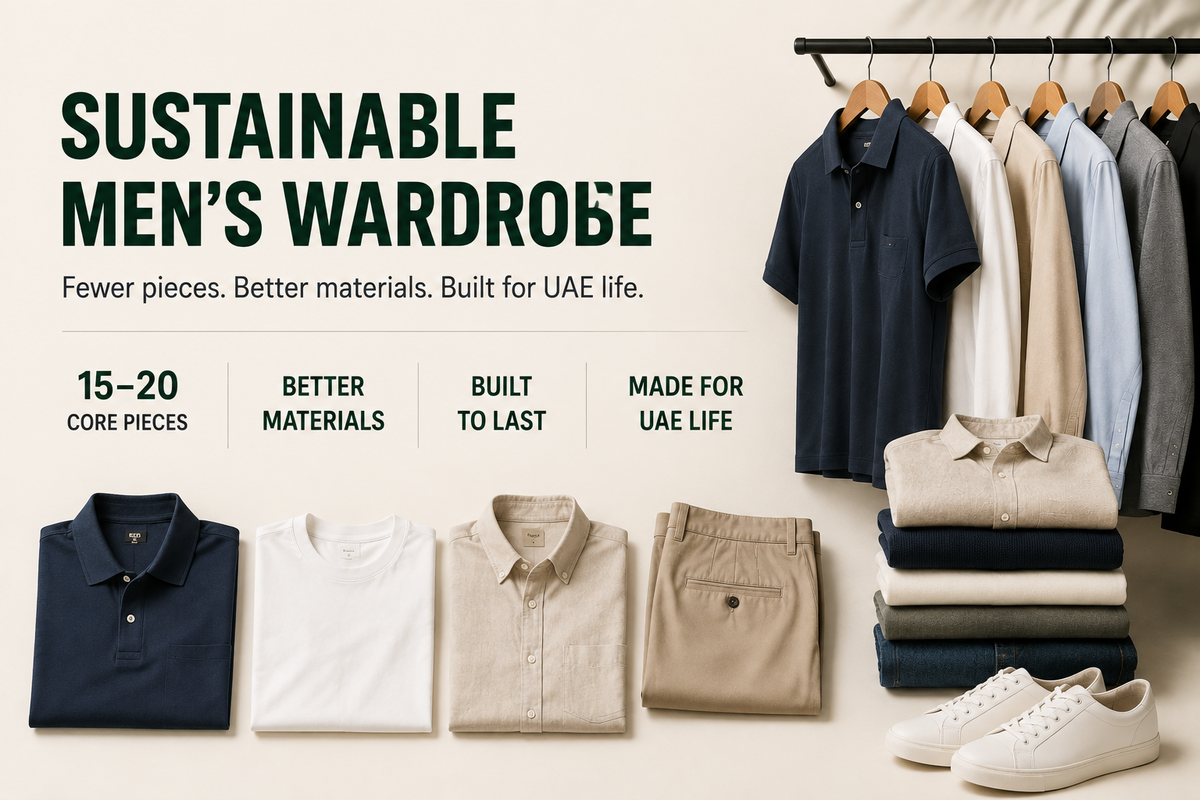
Short answer: A sustainable men's wardrobe isn't about owning more "eco" pieces — it's about owning fewer, better ones in materials that actually survive daily wear. For UAE specifically, that means prioritizing breathability and quick-dry performance (Tencel, linen, engineered natural fibers) over fabrics chosen for a milder climate, and building around 15-20 versatile pieces rather than a large rotating wardrobe.
The capsule number that actually works
Most sustainable-wardrobe guides land on a similar range: roughly 15-20 core pieces in neutral tones — navy, grey, beige, white, black — chosen specifically because they mix and match rather than each needing its own matching outfit. That's not a minimalism aesthetic choice, it's a practical one: fewer pieces means each one gets worn more, which is the entire mechanism behind sustainable fashion actually working (a garment worn 40 times beats one worn 4 times, regardless of how "eco" either was to produce).
A reasonable starting list: dark jeans or chinos, a few solid-color tees, a couple of button-downs, one or two knitwear pieces for AC-heavy environments, versatile trousers, and footwear that isn't trend-specific.
The fabric hierarchy for actual UAE wear
Cross-referencing this against what genuinely performs in heat (covered in more depth in our natural fiber guide and sustainable fabrics glossary):
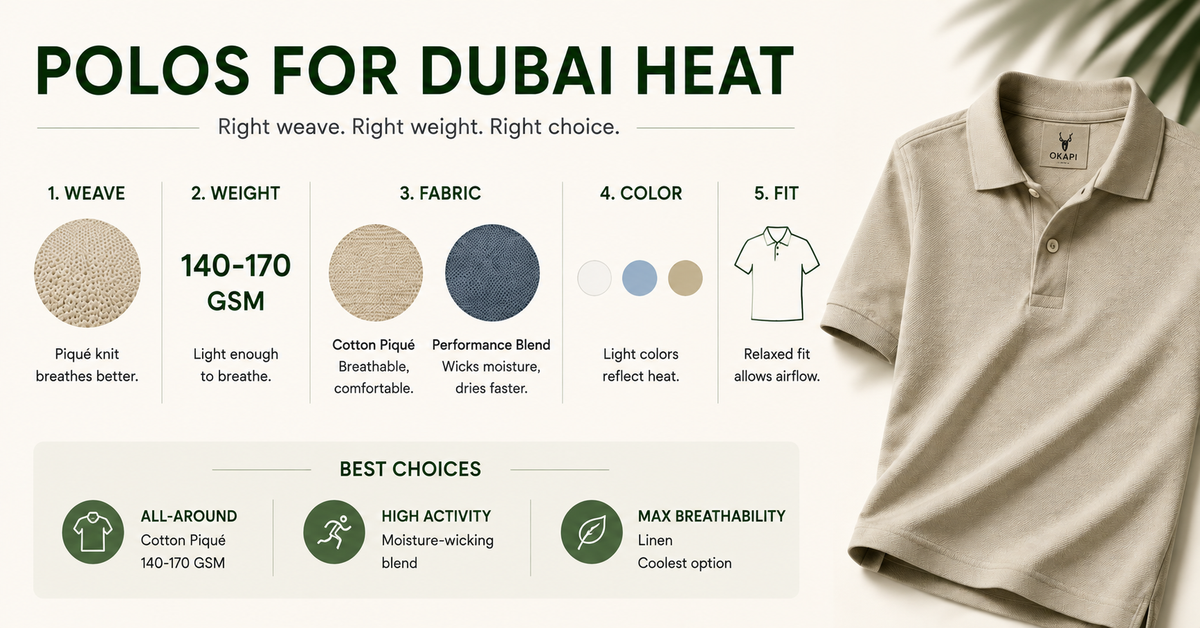
- Best for daily heat: linen, Tencel, engineered quick-dry natural fibers
- Solid daily option: organic cotton, accepting the moisture-absorbency tradeoff
- Situational only: wool, heavy knits — reserve for AC-heavy offices or travel
- Case-by-case: hemp — good durability, but check processing before assuming softness

Care matters as much as the fabric choice
This is the part most men's style guides skip entirely, and it's genuinely half the sustainability equation: how you wash and dry a garment affects its lifespan as much as what it's made of. Air-drying instead of tumble-drying, washing less frequently (not every single wear), and repairing small holes or loose threads promptly all extend a garment's working life meaningfully — none of which requires buying anything new, which makes it the cheapest sustainability intervention available to anyone, full stop.
In UAE conditions specifically, this gets slightly complicated: heat and sweat genuinely do increase wash frequency compared to milder climates. The workaround isn't skipping washes you actually need — it's choosing fabrics in the first place that don't demand a wash after every single wear the way heavy absorbent cotton does.
What to actually look for when shopping
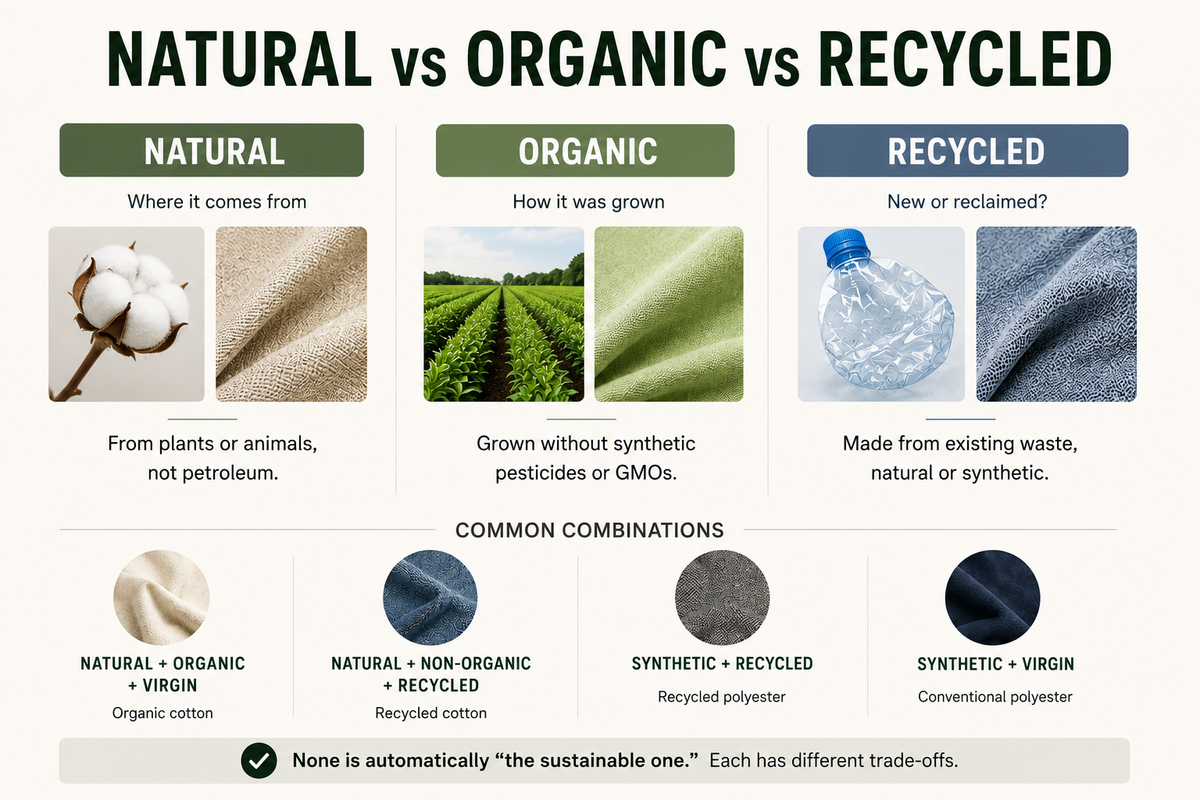
- A named material, not a vague "eco" claim — Tencel, organic cotton, hemp, linen, or a specifically named engineered fiber, not just "sustainable fabric."
- Construction quality over logo or trend — tightly woven material, reinforced seams, and simple silhouettes that won't look dated in two years age better than anything trend-specific.
- A brand that discloses where and how it's made — this applies as much to men's basics as anywhere else, per our greenwashing checklist.
- Fit that works for actual UAE life — breathable through the day, presentable enough to go straight from outdoor heat into an AC office without needing a full outfit change.
Where Okapi fits into this wardrobe
Café Polo and Café Tee are built specifically around this capsule logic — coffee-ground fabric chosen for odor resistance and quick-dry performance through a full UAE day, meant to be worn in weekly rotation rather than saved for occasions. That's the actual test for whether a "sustainable" men's piece works: not how it photographs, but whether it survives being worn every week for two years without falling apart or needing replacement.
Frequently asked questions
How many pieces does a genuinely sustainable men's capsule wardrobe need?
Most practical guides land around 15-20 core pieces in neutral, mix-and-match colors — enough variety for daily dressing without excess pieces that go unworn.
Does fabric care really matter as much as fabric choice?
Yes — air-drying, washing less frequently, and prompt small repairs extend a garment's lifespan significantly, and unlike buying a new "sustainable" piece, proper care costs nothing extra.
What's the single best fabric for men's daily wear in UAE heat?
Linen offers the strongest cooling performance but wrinkles heavily; Tencel and engineered quick-dry natural fibers offer a closer balance of breathability and low-maintenance daily practicality.
Is wool ever worth owning in a UAE men's wardrobe?
Mainly for heavily air-conditioned office settings or travel to cooler climates — it's one of the least climate-appropriate fabrics for daily outdoor UAE wear.