

Natural Fiber Clothing: A Buyer's Guide
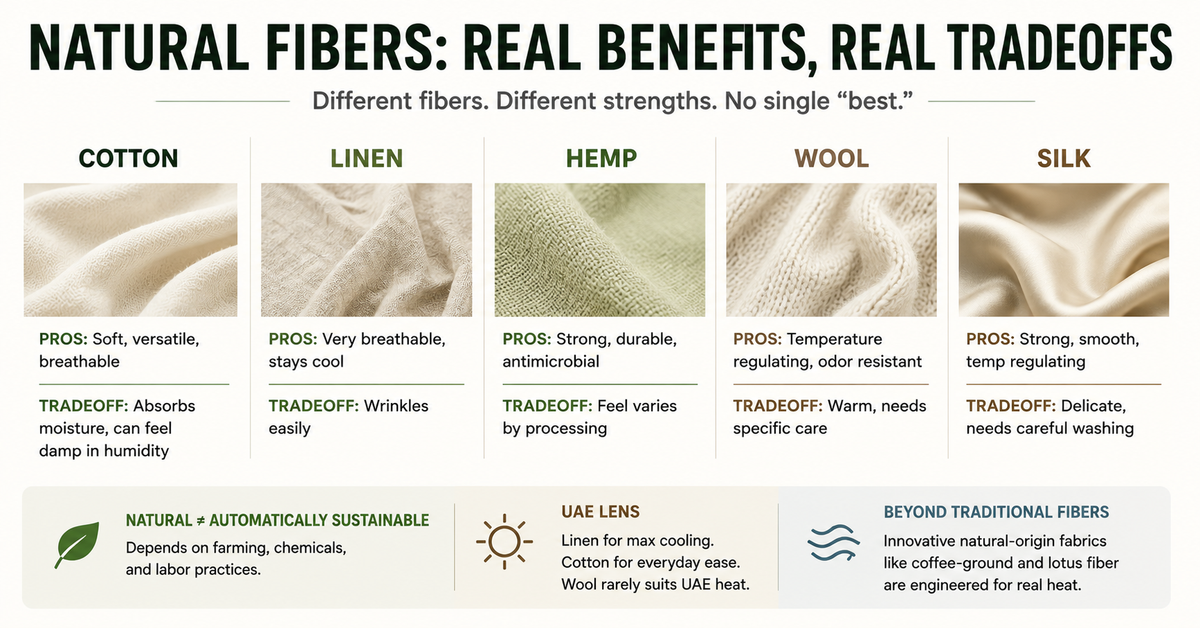
Short answer: Natural fibers — cotton, linen, hemp, wool, silk — come from plants or animals rather than petroleum, and each has real, different tradeoffs: cotton is soft but absorbent, linen is cool but wrinkles, hemp is durable but can feel stiff, wool regulates temperature but needs specific care. There's no single "best" natural fiber — the right one depends entirely on what you're wearing it for and where.
Most guides to this topic read like a brochure — every fiber sounds perfect, nothing has a downside. That's not useful for actually shopping. Here's the version with the tradeoffs left in.
Cotton — the default, for good reason and bad ones
Cotton makes up the largest share of natural fiber clothing by a wide margin, and it earns that position honestly: soft, versatile, breathable, works for nearly everything. The catch is absorbency — cotton holds onto moisture rather than wicking it away, which means in genuinely hot, humid conditions it can end up feeling damp and heavy rather than cool. Organic cotton solves the pesticide and chemical-input problem but not the moisture problem — that's a fiber-structure issue, not a farming-practice one.
Linen — the actual heat specialist, with one honest cost
Linen, made from flax, is one of the few natural fibers genuinely built for heat — it releases moisture rather than trapping it, which is why it's the traditional fabric of every hot-climate culture from the Mediterranean to South Asia. The tradeoff is real and unavoidable: linen wrinkles, and that's not a manufacturing flaw, it's the fiber's structure. If you want the cooling benefit, you accept the crumpled look, or you pay for an easy-care finish that softens (but doesn't eliminate) the wrinkling.
Hemp — underrated, but check what you're actually buying
Hemp is genuinely strong, naturally antimicrobial, UV-resistant, and softens with each wash rather than degrading. It also grows with far less water and fewer pesticides than conventional cotton, which is a real environmental advantage. The catch: hemp is frequently sold with sweeping, vague environmental claims that don't hold up to scrutiny, and the feel varies enormously depending on processing — some hemp fabric is genuinely soft, some stays dry and stiff no matter how it's marketed. Feel it before you trust the marketing copy.
Wool — excellent for cold, complicated for everything else
Wool regulates temperature and resists odor better than almost any other fiber, which makes it genuinely excellent for cold-weather wear. It's a poor fit for most of the UAE's climate for obvious reasons, and sourcing matters more here than with plant fibers — wool quality and animal welfare standards vary widely by producer, so "wool" alone tells you less than "GOTS-certified organic cotton" would for a plant fiber.
Silk — better than its reputation, worse than its marketing
Silk's reputation as delicate is somewhat overstated — properly cared for, it's surprisingly strong, and its natural temperature-regulating quality (cool in heat, warm in cooler conditions) makes it more versatile than people assume. It's primarily suited to base layers, linings, and lightweight pieces rather than heavy daily wear, and it demands more careful laundering than any fiber on this list.
What "natural" doesn't automatically mean
Worth saying plainly: natural fiber doesn't automatically mean sustainable, and it definitely doesn't automatically mean ethically made. A natural fiber can still be grown with heavy pesticide use, processed with harsh chemicals, or manufactured in a factory with poor labor conditions. Natural describes the fiber's origin, not the supply chain around it — those are two separate questions, covered in more depth in our ethical vs sustainable clothing breakdown.
The UAE lens: what actually holds up here
For genuine daily UAE heat, cotton and linen are the two classic choices — cotton for softness and versatility, linen when you can accept the wrinkle tradeoff for maximum breathability. Wool and heavy silk mostly don't belong in a UAE daily wardrobe outside of AC-heavy office settings. Hemp sits in an interesting middle position: durable enough for daily wear, but check the specific garment's processing before assuming it'll feel soft against skin in high heat.

This is also where blended or engineered natural fibers earn their place — Okapi's coffee-ground fabric and lotus fiber aren't traditional natural fibers in the cotton/linen/hemp sense, but they're built on the same underlying logic: natural-origin material, engineered specifically for breathability and quick-dry performance in exactly the climate conditions this guide is talking about, rather than borrowed from a fiber developed for a milder market.
Frequently asked questions
Which natural fiber is best for UAE heat specifically?
Linen offers the best cooling performance but wrinkles heavily; cotton is the more practical daily-wear compromise between breathability and low maintenance.
Is natural fiber always more sustainable than synthetic?
Not automatically — a natural fiber can still involve heavy pesticide use or harsh chemical processing. Natural origin and sustainable production are related but separate questions.
Why does hemp fabric feel different between brands?
Processing method matters enormously for hemp specifically — some processing yields soft fabric, other methods leave it dry and structured, regardless of how "premium" the marketing sounds.
Is wool worth owning in the UAE at all?
Mainly for heavily air-conditioned office environments or travel to cooler climates — it's genuinely one of the least climate-appropriate natural fibers for daily UAE outdoor wear.