

What Is Sustainable Clothing? A Complete Guide to Fabrics, Fashion & Better Choices
Fashion is something we wear every day, but we rarely stop to think about what goes into making our clothes.
Where did the fiber come from? How was the fabric produced? How long will the garment last? And what happens when we no longer wear it?
These questions have helped bring sustainable clothing into the mainstream fashion conversation.
But sustainability is more complicated than simply putting the word "eco" on a label.
What Is Sustainable Clothing?
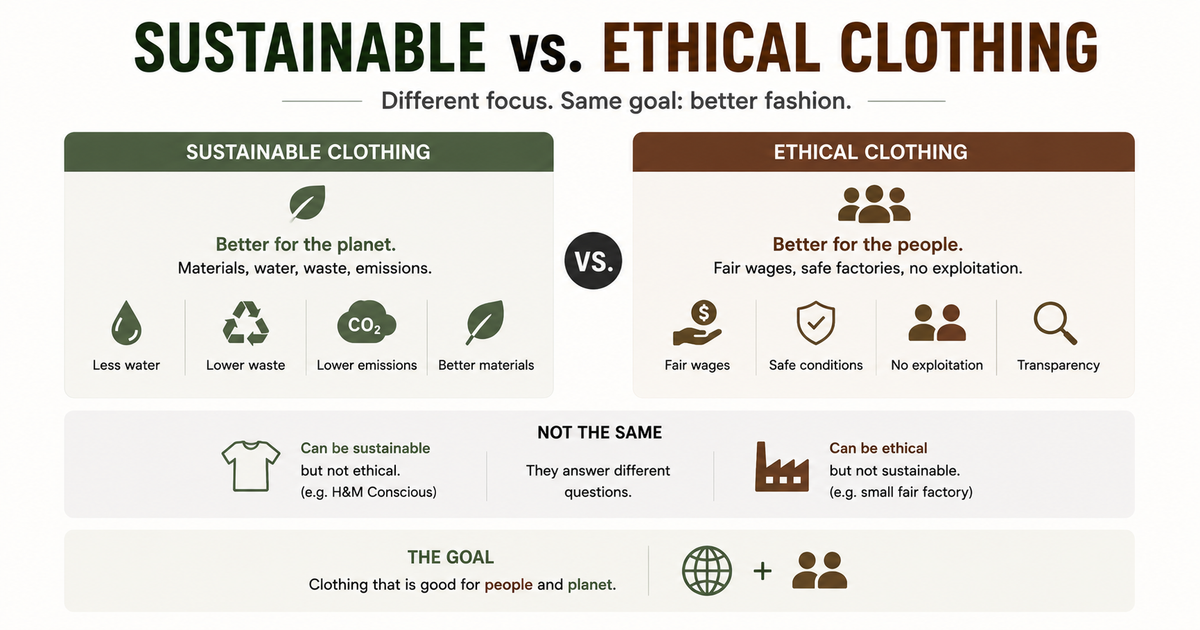
Sustainable clothing generally refers to garments designed and produced with greater consideration for their environmental and social impact across their lifecycle.
That can include decisions around raw materials, manufacturing, durability, packaging, transportation and what happens to the garment at the end of its useful life.
There is no single fabric or manufacturing method that automatically makes a piece of clothing sustainable.
Instead, sustainability is better understood as a series of choices.
Why Does Fabric Matter?
Every garment starts with a material.
Traditional fashion has long relied on familiar fibers such as cotton, wool and polyester. Today, designers and textile innovators are exploring a much wider material landscape.
That includes bamboo-derived fibers, recycled synthetics and less conventional sources such as lotus stems, banana plants, pineapple leaves and even coffee-industry by-products.
The important question isn't simply whether a material sounds natural.
Consumers should consider how the raw material is sourced, how it is processed into textile fiber, how durable the resulting garment is and what evidence supports environmental claims surrounding it.
What Are Sustainable Fabrics?
"Sustainable fabric" is a broad term rather than a guarantee.
Depending on sourcing and manufacturing, the category can include responsibly produced natural fibers, recycled fibers and materials that make use of agricultural or industrial by-products.
Some of the materials attracting attention in modern fashion include:
-
Recycled polyester and nylon
-
Bamboo-derived textiles
-
Lotus-derived fibers
-
Banana-derived fibers
-
Pineapple-leaf-derived materials
-
Textiles incorporating recycled coffee grounds
Innovation becomes particularly interesting when materials that might otherwise have limited value can become inputs for useful products.
Is Natural Fabric Always Sustainable?
No.
"Natural" and "sustainable" do not mean exactly the same thing.
A natural raw material may still require significant land, water, chemicals, energy or processing before becoming wearable fabric.
Similarly, a synthetic material isn't automatically the least responsible choice in every situation.
The complete lifecycle matters.
This is why shoppers should look beyond attractive environmental terminology and ask for clear information about materials, manufacturing and product durability.
Sustainable Clothing vs Fast Fashion
One of the biggest differences is often the philosophy behind the garment.
Fast fashion typically emphasizes rapid trend cycles, frequent purchasing and low-cost production.
A more considered approach encourages consumers to think about quality, versatility and longevity.
A garment that works across many occasions and remains in regular use can often be a more sensible wardrobe investment than several pieces purchased for short-lived trends.
How to Choose More Considered Clothing
You don't need to replace your entire wardrobe.
Start by asking simple questions before your next purchase.
What is it made from?
Read the material composition instead of relying only on marketing language.
Will I actually wear it?
Versatility matters. A premium polo that works for travel, casual meetings and weekends may earn significantly more wear than a highly specific trend piece.
Is it made to last?
Construction, fit and fabric quality matter alongside material choice.
Can the brand explain its claims?
Specific information is more useful than vague claims such as "green," "planet-friendly" or "100% sustainable."
The Future of Sustainable Fashion Is Material Innovation
Some of the most exciting developments in fashion are happening before a garment is even designed.
They are happening at the material level.
Textile developers are exploring new ways to use existing resources, agricultural materials, recycled inputs and manufacturing technologies to create fabrics with useful characteristics.
At Okapi Lifestyle, this material-first philosophy is central to how we think about modern clothing.
We explore unconventional textile stories—including coffee, lotus, bamboo, banana, pineapple, mint and recycled materials—to create clothing where nature, textile innovation and contemporary design can meet.
Because the future of fashion shouldn't only look different.
It should think differently.
Frequently Asked Questions
What does sustainable clothing mean?
Sustainable clothing generally refers to garments created with consideration for environmental and social impacts across areas such as materials, manufacturing, durability and end-of-life.
Is sustainable clothing expensive?
Not necessarily. Price depends on the material, manufacturing process, quality, brand and product. Cost-per-wear can also be useful when comparing a durable garment with frequently replaced lower-cost clothing.
Which fabric is the most sustainable?
There is no single universally "most sustainable" fabric. The answer depends on sourcing, processing, manufacturing, durability, use and disposal.
Are recycled fabrics sustainable?
Recycled materials can reduce reliance on virgin raw materials in certain applications, but their overall environmental impact still depends on manufacturing and lifecycle factors.
What should I look for when buying sustainable clothing?
Look for transparent material information, credible claims, quality construction, useful design and garments you are likely to wear repeatedly.
A Better Wardrobe Starts With Curiosity
Sustainable fashion isn't about creating a perfect wardrobe overnight.
It starts with understanding what we wear.
Ask where your clothing came from. Learn about the material. Buy pieces you genuinely enjoy wearing. Take care of them. Keep them longer.
And remain curious about what clothing can become.
Made from nature. Made better.
Explore Okapi Lifestyle and discover a new generation of material-led everyday clothing.