

Sustainable Fabrics 101: What You're Actually Wearing
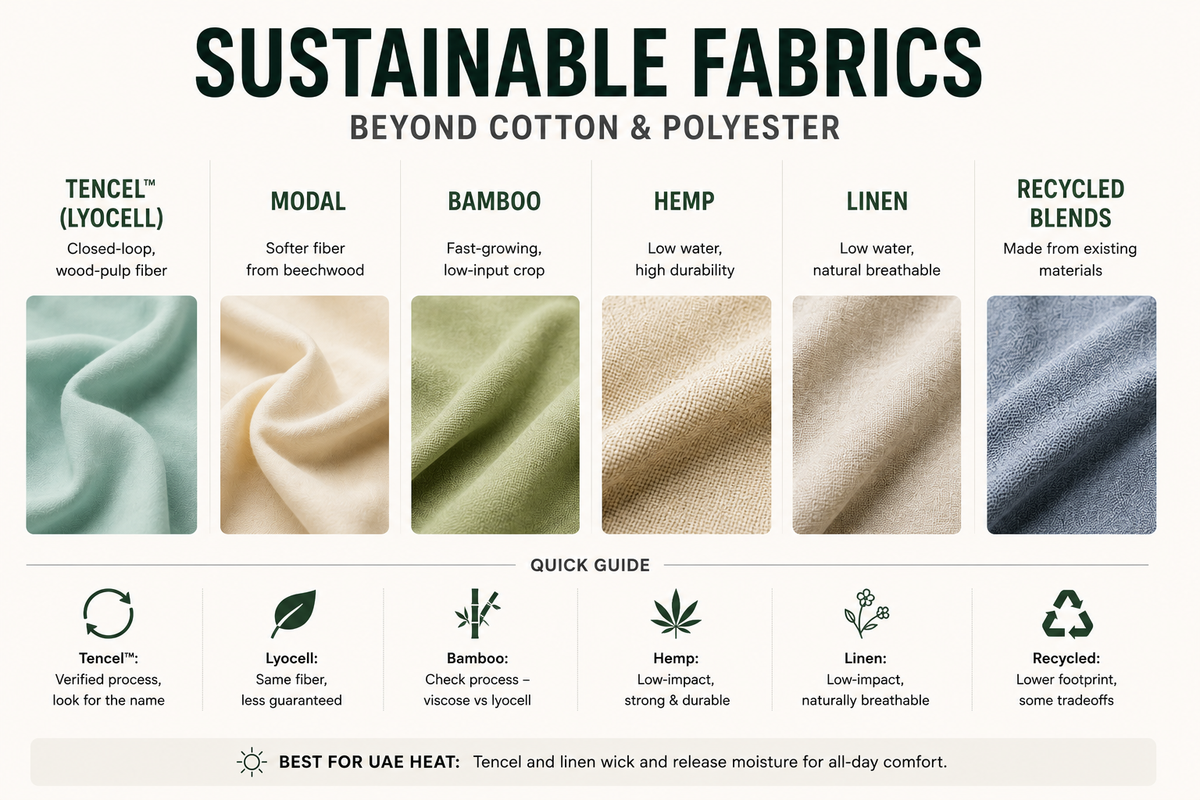
Short answer: Beyond cotton and polyester, most "sustainable fabric" claims you'll see fall into a handful of real categories: Tencel/lyocell and modal (wood-pulp based, closed-loop processed), bamboo (fast-growing, low-input), hemp and linen (low-water plant fibers), and recycled-fiber blends. Each has a genuine sustainability story — but one of the most common names on this list, "Tencel," is actually a brand name, not a fiber type, and that distinction matters more than most people realize.
The distinction nobody explains: Tencel vs. lyocell
Here's the one that surprised me. "Lyocell" is a generic fiber category — wood pulp dissolved and spun into fiber. "Tencel" is a specific brand name owned by the Austrian company Lenzing AG, applied only to lyocell and modal produced under Lenzing's specific standards: certified or controlled wood sourcing, a closed-loop solvent recovery system reclaiming over 99% of the chemical solvent used, and regular independent auditing.
The practical upshot: all Tencel is lyocell, but not all lyocell is Tencel. Generic lyocell can be produced with far less oversight and a less closed process. If a garment says "lyocell" without the Tencel name attached, you're getting the fiber category without the specific sustainability guarantee that made lyocell's reputation in the first place.

Modal — Tencel's softer cousin
Modal is a related fiber, also often produced by Lenzing under the Tencel name, but made from beechwood rather than eucalyptus. It's typically softer and more flexible than lyocell, which is why it shows up disproportionately in underwear, sleepwear, and soft everyday basics rather than structured garments.
Bamboo — genuinely low-impact to grow, more complicated to process
Bamboo grows fast without pesticides or irrigation, which makes the raw crop genuinely low-impact. The complication is what happens after harvest: turning bamboo into soft fabric usually requires a chemical viscose process similar to rayon production — meaning the "bamboo" label alone doesn't guarantee a clean process the way the growing stage does. Bamboo processed through a closed-loop lyocell-style method (sometimes labeled "bamboo lyocell") is meaningfully cleaner than bamboo viscose, but the label rarely distinguishes between the two.
Hemp and linen — the low-water plant fiber pair
Both are genuinely low-input crops requiring far less water and fewer pesticides than conventional cotton, and both use nearly the entire plant with little waste. The tradeoffs are more about feel and use than sustainability: hemp can run stiffer depending on processing, linen wrinkles by nature. Neither needs a brand name attached the way lyocell does — "hemp" and "linen" are more straightforwardly what they say, since there's less chemical processing variability between producers.
Recycled-fiber blends
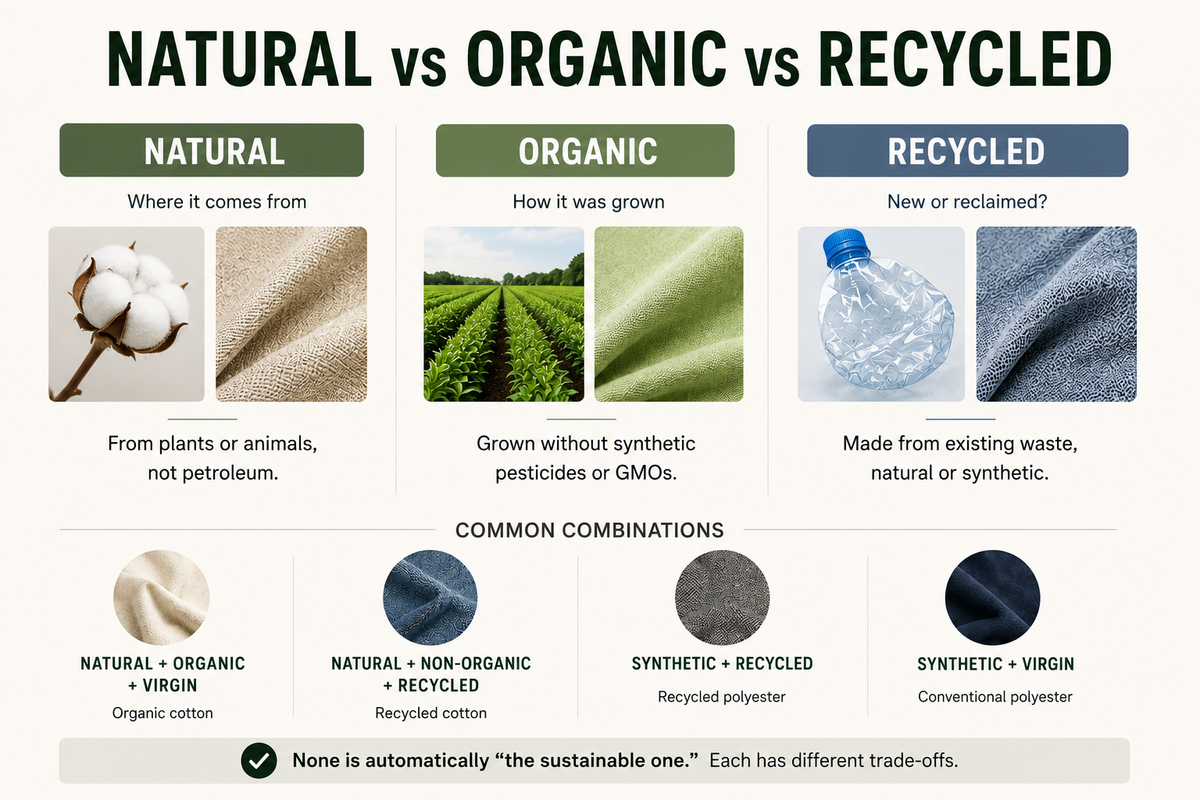
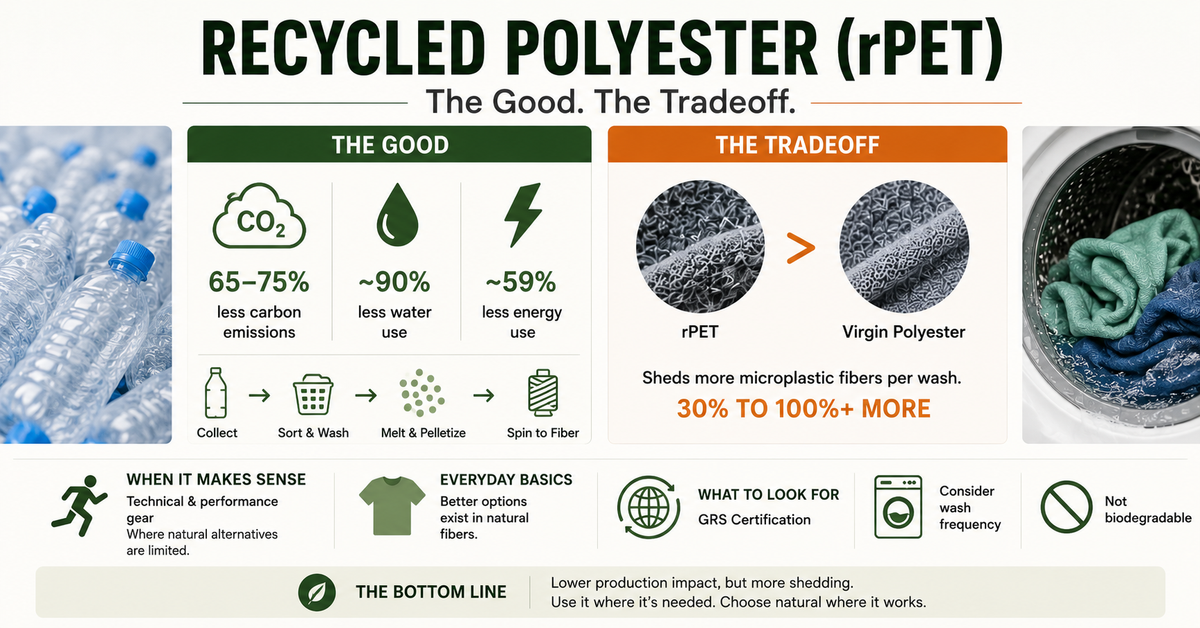
Recycled polyester and recycled cotton blends divert existing material from waste streams, which is a real benefit — but as covered in our recycled polyester breakdown, the picture is more complicated for synthetic recycled fibers specifically (microplastic shedding is a genuine tradeoff, not a solved problem). Recycled cotton blends don't carry that particular downside, but often sacrifice some durability compared to virgin cotton, since recycling cotton fiber shortens and weakens the strands.
The one-line cheat sheet
- Tencel (branded lyocell/modal): genuinely well-verified, closed-loop process — look for the actual Tencel name, not just "lyocell."
- Generic lyocell: same base fiber category, meaningfully less guaranteed oversight.
- Bamboo: clean to grow, check whether it's processed as viscose or closed-loop lyocell-style.
- Hemp/linen: low-water, low-pesticide, minimal chemical processing variability.
- Recycled polyester: lower production footprint, real microplastic-shedding tradeoff.
- Recycled cotton: avoids the microplastic issue, some durability tradeoff.
Applying this in UAE heat
For genuine daily wear in UAE conditions, Tencel and linen tend to perform best — both actively wick and release moisture rather than trapping it, which matters more here than almost anywhere else covered by generic "sustainable fabric" guides written for milder climates. Bamboo lyocell is a reasonable middle option if you can verify the processing method; bamboo viscose loses some of that verified-clean-process advantage.
This is also, honestly, where Okapi's own materials sit slightly outside the standard glossary — coffee-ground fabric and lotus fiber aren't on most "sustainable fabrics" lists because they're less common globally, not because they don't qualify. We're not trying to squeeze them into an existing category; they're a genuinely different approach built around the same underlying goals this whole list is chasing: low input, natural origin, and performance suited to real heat rather than a mild-climate default.
Frequently asked questions
Is Tencel the same thing as lyocell?
All Tencel is lyocell, but not all lyocell is Tencel — Tencel is a specific brand name from Lenzing AG with verified closed-loop processing and sourcing standards that generic lyocell isn't required to meet.
Is bamboo fabric always sustainable?
The raw crop is low-impact to grow, but processing matters — bamboo turned into fabric through a conventional viscose process involves more chemical input than bamboo processed through a closed-loop lyocell-style method.
What's the difference between modal and lyocell?
Modal is typically made from beechwood and is softer and more flexible; lyocell (including Tencel Lyocell) is typically made from eucalyptus and has a slightly higher tenacity, often used in more structured garments.
Which sustainable fabric works best in UAE heat?
Tencel and linen generally perform best for genuine daily heat, since both actively wick and release moisture rather than holding it against the skin.